New Book of the Week (December 11, 2018)
Seattle Now and Then: The Historic Hundred
by Paul Dorpat and Jean Sherrard
For almost forty years, and over 1,800 installments, Paul Dorpat's Seattle Now and Then series, pairing a historical city photo with a current one and a short essay, has been one of the most beloved features in the Seattle Times's Sunday magazine, and now Dorpat and photographer Jean Sherrard have chosen 100 of their favorite pairs for what will certainly be one of the definitive Seattle history books on local coffee tables. Think our city's been transformed entirely in the last five or ten years? How about the last fifty or a hundred? You'll find remarkable changes in our urban landscape, and some surprising continuities: I was drawn to a 1953 photo of pedestrians celebrating the opening of the Alaskan Way Viaduct, a celebration set to be repeated at its closing next month. —Tom
New Book of the Week (November 19, 2018)
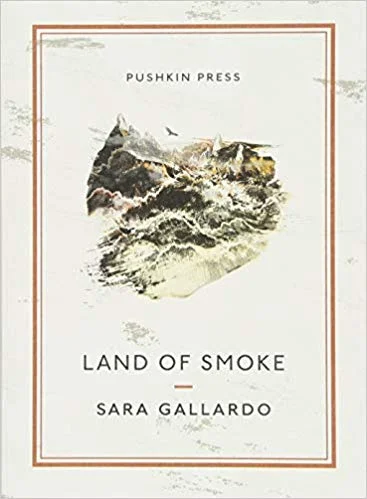
Land of Smoke
by Sara Gallardo
I've been reading these stories for months, off and on in between other books. I'm not sure I could have read them any other way: they read easily, but take some digesting, in the best way. Gallardo wrote from the '50s through the '70s and was a well-known figure in Argentina, but this is her first book translated into English, and it landed (on me at least) like stone tablets from another world. She's described as a "magical realist," because she's South American and because there are fantastic elements in her stories, but she stands apart from her apparent peers, Garcia Marquez and Borges. Some of these many stories are only a page long, some are twenty. There are monsters, suicides, priests, exiles, and many, many animals. But more than anything there is her voice: spoken with utterly confident authority, able and willing to turn a story on a dime at any moment. —Tom
Old Book of the Week (December 10, 2018)
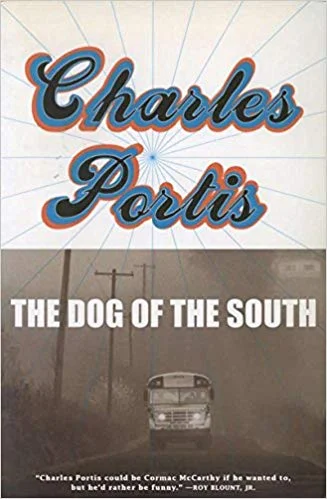
The Dog of the South
by Charles Portis
I hardly ever truly laugh out loud when I'm reading. But I make a racket when reading Portis, especially this novel, the third of the merely five he has written in fifty years. I could describe the plot, which—barely—consists of the hero's pursuit of his runaway wife through the south, Mexico, and a long, aimless sojourn in Belize City, or I could try to explain why Portis is so damn funny (I think it's partly from his exquisite taste for human oddity but mostly from his surprisingly tender understanding of the ways human hubris and humility can operate side-by-side, in the very same human). But really the best recommendation I could give is to request that you read the opening few pages of The Dog of the South, which begin, "My wife Norma had run off with Guy Dupree and I was waiting around for the credit card billings to come in so I could see where they had gone. I was biding my time," and go on from there. My eyes are tearing up just reading them over again. —Tom
Kids Book of the Week (December 10, 2018)
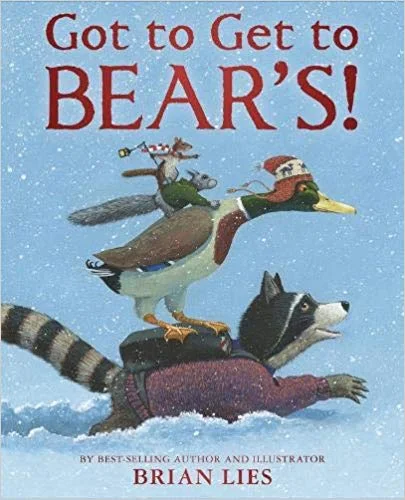
Got to Get to Bear’s
by Brian Lies
Got to Get to Bear's is a sweet and simply constructed tale of friendship ("If Bear asks, you gotta go!"), cooperation, and surprise, but what makes it special are Lies's illustrations, which evoke the special, adventurous thrill of a big winter snow and make you feel like you too are along for the ride, carried through the storm by this band of friends. It's delightful. (Ages 0 to 5) —Tom

Old Book of the Week (November 19, 2018)
Song of Spider-Man: The Inside Story of the Most Controversial Musical in Broadway History
by Glen Berger
At some point in the previous decade, news filtered back to me that Glen Berger, the most talented person I knew in college, was writing a Spider-Man musical with U2 and Julie Taymor. What a break for an unknown playwright! Well, you may have heard how that turned out: a notorious Broadway disaster that still managed to survive for over a thousand performances. If you want to hear more, Berger told all in this 2013 memoir, written amid the wreckage left by a typhoon of artistic overambition and technical catastrophe. If there were any bridges left standing after that debacle, he burns them here, but with a rueful earnestness that makes it clear he wishes he could build them all back again. My favorite Broadway book is Act One, Moss Hart's delightful tale of his charmed debut. Glen's story is, sadly, its opposite, but a fascinating page-turner that might be just as useful for a young artist to read. —Tom
Kids Book of the Week (November 12, 2018)
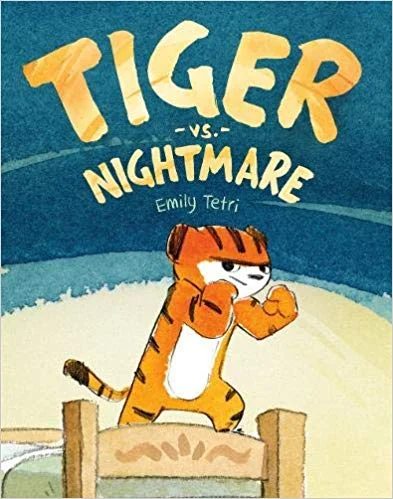
Tiger Vs. Nightmare
by Emily Tetri
What do you do if the monster under your bed turns out to be a pretty great friend? Well, if you're Tiger, you bring back a little bit of dinner for your friend and play games until bedtime, before your friend fights off your nightmares until morning. But what do you do if your friend encounters a nightmare too strong to resist? That's the story of this beginner's graphic novel, painted in washes of bright orange and scary (but not too scary) grays, and full of the spirit of friendship and shared courage. (Age 3 to 6) —Tom
Old Book of the Week (November 5, 2018)
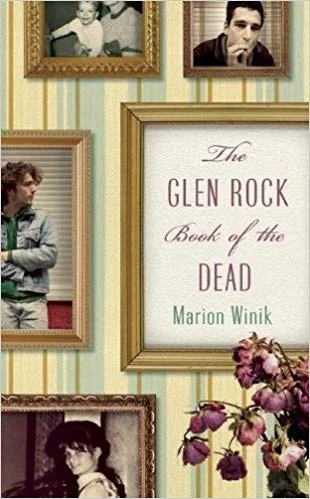
The Glen Rock Book of the Dead
by Marion Winik
This tiny book is made up of tiny sketches of the departed, their brevity a reminder of the brevity of all of our lives. They are known only by the nicknames Winik gives them—the Clown, the Junkie, the Queen of New Jersey—and their lives are not summarized on their own terms but by their presence, slight or central, in her own, which makes the book a kind of memoir by indirection, by an author who could easily have shared the fate of her subjects. (In time, like all of us, she will.) You might be reminded of Jim Carroll's punk-junkie anthem, "People Who Died": she shares some of his made-it-out-alive-for-now bravado, and the poignancy of a life, and a death, defined in just a few words. —Tom
Old Book of the Week (November 5, 2018)
The Red Tenda of Bologna
by John Berger
This month's Phinney by Post selection (see above) was so tiny I added a couple of our popular Penguin Modern booklets to the package, including this perfect companion, Berger's marvelous elegy for his uncle: a ne'er-do-well, a curious and thoroughly idiosyncratic man, and a traveler with a love of, among other places, the old city of Bologna. It's as beautiful and off-handedly insightful as anything I've read of Berger's. —Tom

Kids Book of the Week (November 5, 2018)
Carmela Full of Wishes
by Matt de la Pena and Christian Robinson
The duo behind Last Stop at Market Street, the rare picture book weighty enough to win the Newbery Medal, returns with another story balancing melancholy and hope. It's Carmela's birthday, and she gets her dearest wish, to finally go on family errands with her older brother, only to learn from him, in the usual mean-and-sweet big-brother way, that there is another wish to be made. It's a lovely and tender story. (Ages 2 to 6) —Tom
New Book of the Week (October 29, 2018)
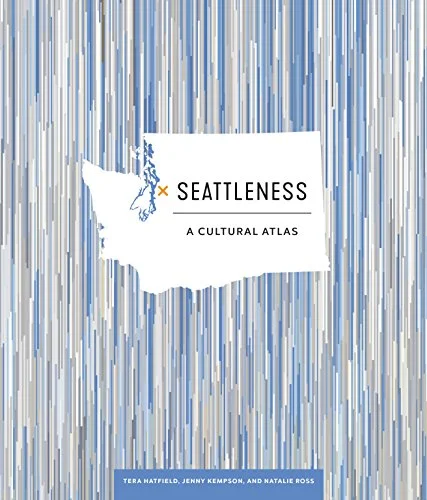
Seattleness: A Cultural Atlas
by Tera Hatfield, Jenny Kempson, and Natalie Ross
What is Seattle? Anyone who has lived here more than a year has watched the city transform under our feet, as it has many times before. The three creators of Seattleness use their expertise in design, architecture, and geography to turn our ideas of Seattle inside-out again and again on the page. See our familiar topography of hills and inlets remapped to reveal layers of history and patterns of behavior: two of the pages I lost myself in most thoroughly were a color-coded 3D map of downtown's building booms and a stylized grid showing the density and influence of corporate and independent coffee shops. And of course I was fascinated by a chart measuring the frequency of various plot elements in Seattle-set novels. (Also, Phinney Books gets a mention!!) Open it up, and rethink your own city. —Tom
New Book of the Week (October 29, 2018)
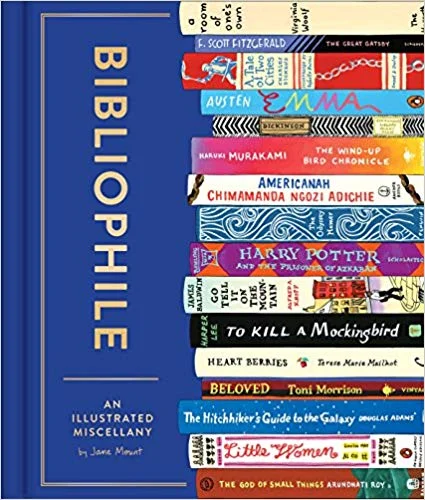
Bibliophile: An Illustrated Miscellany
Those of you who know Jane Mount only from her colorful illustrations of shelved and stacked book spines might be surprised—as I was—that her new book of literary "miscellany" is as miscellaneous as it is, full not only of her trademark spines but of profiles of bookstores and libraries, lists of recommended reading, and general celebrations of bookishness in all its varieties. Whatever self-congratulatory preciousness you might fear would lie within such a project is overwhelmed by the warmth and open-eyed joy she makes you feel for the physical presence of books and the places they inhabit. To say her illustrations leap off the page is not quite right; rather, they remind you how much leaping can take place on a page. —Tom
Ex-Kids Book of the Week (October 29, 2018)
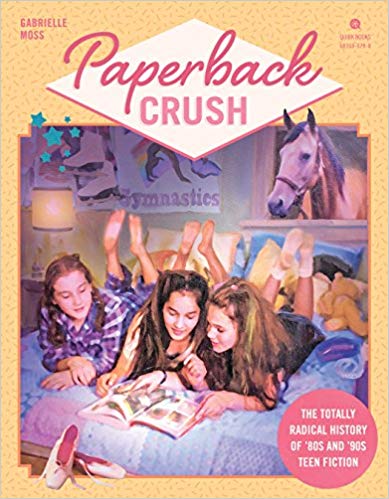
Paperback Crush: The Totally Radical History of ‘80s and ‘90s Teen Fiction
by Gabrielle Moss
Return with Gabrielle Moss to what she calls a "pastel parallel universe," the moment in teen and tween fiction between the '70s heyday of Judy Blume and the millennial rise of J.K. Rowling. In that interregnum, two other queens reigned: "foxy blonde sociopaths" named Jessica and Elizabeth Wakefield, the heroines of dozens of Sweet Valley High romances that were less likely to be recommended by librarians than bought by the handful at Waldenbooks. Moss revisits their era with the same affectionate analysis as her publisher's previous Paperbacks from Hell: The Twisted History of '70s and '80s Horror Fiction, going beyond contempt or nostalgia to do justice to an entire generation's imaginative life, as blonde and blow-dried as it might have been. (Ages 35 to 50) —Tom
New Book of the Week (October 22, 2018)
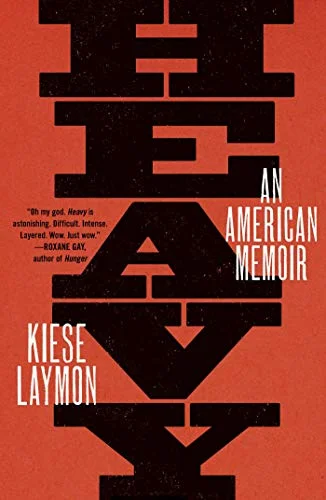
Heavy: An American Memoir
by Kiese Laymon
Heavy is a book unsatisfied with itself, by a writer unsatisfied with himself, and with us. He begins by saying he "wanted to write a lie," a happier, less messy memoir, but he couldn't. Instead, he wrote an almost unbearably intimate book, framed as a letter to his mother, who has been his champion, his protector, his abuser. Reading it, you may at first focus on the pain he reveals, but what becomes even more overwhelming is the tenderness he feels toward even his tormentors. There is plenty of theory behind Laymon's thinking about living as a black person in Mississippi and in the United States—as he says, and as his professor mother made sure, he has read everything—but you will rarely read a book so fully weighted in a body and all its messy, destructive, tender desires, or one that argues so convincingly that bodies are where thinking—and change—must begin. —Tom

Kids Book of the Week (October 22, 2018)
Mix-a-Mutt
by Sara Ball
We're all getting used to seeing labradoodles and puggles, but this new oversized board book takes the canine combos a step further. Three sets of flip pages let you concoct your own new breeds: how about a dachshund-shar pei-komondor, or a greyhound-Yorkshire terrier-Dalmatian? The wittily drawn dogs add to the good humor, and the useful descriptions of breed characteristics makes it surprisingly edifying too. (2 and up) —Tom
New Book of the Week (October 15, 2018)
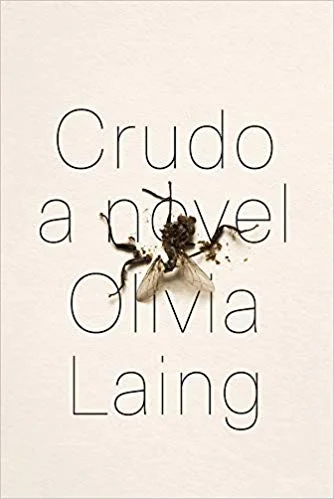
Crudo
by Olivia Laing
The reputation that Olivia Laing gathered from her books on writers and nature (To the River), writers and drinking (The Trip to Echo Spring), and writers and loneliness (The Lonely City) caused quite a bit of anticipation for this, her first novel. It's a slim one, and immersed in the moment, in the summer of 2017 in particular, a time, as she writes, of increasing cruelty, and of people warming to it. She's writing in the style of the new "autofiction"—some parts of the story seem taken from her life—but with a twist: rather than a mere "I" her main character is "Kathy," filled with the spirit of the late writer Kathy Acker. That turn brings a nicely unsettling shift in identity, and also a melancholy sort of hope, as we watch Kathy (the real Acker died in 1997) surviving into this terrible time, and also into a late discovery of love. —Tom
Kids Book of the Week (October 15, 2018)
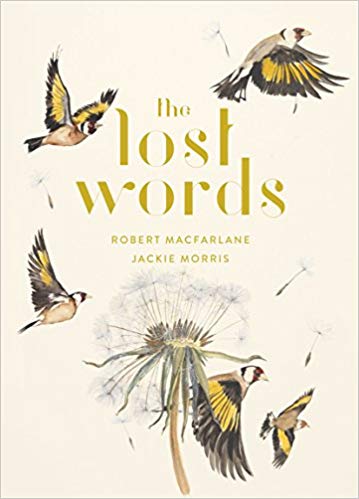
The Lost Words
by Robert Macfarlane and Jackie Morris
We had heard about this book for a while—it was wildly popular and a "book of the year" in the UK, and Macfarlane, Britain's leading nature writer, is becoming beloved in the States too. But seeing it in person is something else entirely. Macfarlane and Morris have set about reclaiming basic words of nature ("acorn," "heron") that, they noticed, have been taken out of children's dictionaries in favor of tech terms like "broadband." But the book they made is not a dictionary—it's a thing of exquisite beauty, celebrating both these simple, evocative words (with poems of Macfarlane's) and the animals and plants they represent (with Morris's glorious paintings). It's a giant book, and one that both kids and grown-ups are likely to cherish. (Age 3 and up) —Tom

New Book of the Week (October 1, 2018)
To Float in the Space Between: A Life and Work in Conversation with the Life and Work of Etheridge Knight
by Terrance Hayes
Poetry is such a compressed art that for me it often requires some space, some context, in which to breathe. Terrance Hayes has taken an entire book to put the work—really a single poem, the appropriately titled "The Idea of Ancestry"—of one of his predecessors, the Black Arts-era poet Etheridge Knight, into context. The result feels like a whole ecosystem, full of air shared and recycled and revived from poet to poet, tracing not only Hayes's debt to Knight but his embeddedness in a written and lived world of friends, fellow artists, mentors. Some of my favorite books—Nicholson Baker's U and I, Geoff Dyer's Out of Sheer Rage—are structured like this one: one writer reckoning with a lifelong obsession with another writer, in all its flaws and failures and excesses. I loved this book too. —Tom
New Book of the Week (September 24, 2018)
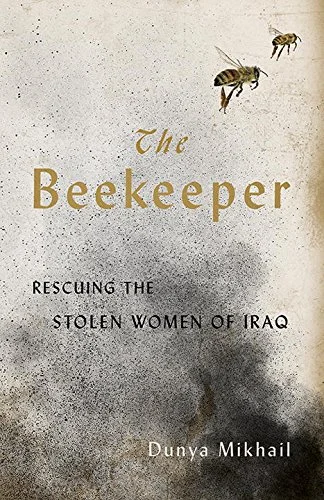
The Beekeeper: Rescuing the Stolen Women of Iraq
by Dunya Mikhail
The recently announced longlist for the first National Book Award for translated literature inspired me to pick up, finally, a book I'd had my eye on: this remarkable account of Iraqi women who escaped their imprisonment and sexual slavery under ISIS (or Daesh, as they are referred to there). Mikhail is an Iraqi poet and journalist, living in exile in Michigan; her link to these stories (via spotty cell-phone calls) is a man named Abdullah, a former beekeeper who has responded to the crisis by becoming a full-time hostage smuggler and negotiator. It is a story of almost unimaginable—but horribly familiar—cruelty, and also of matter-of-fact human decency and heroism. Mere decency, in this case, often feels heroic, even if, unbearably, it may not be enough. —Tom
New Paperback of the Week (September 24, 2018)
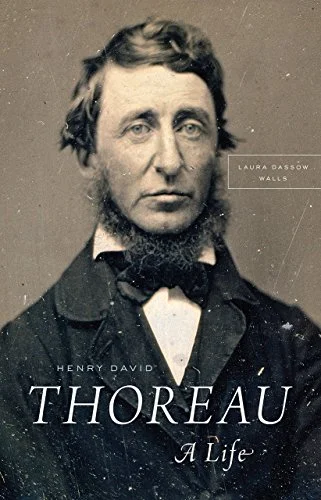
Henry David Thoreau: A Life
by Laura Dassow Walls
From the very start of his career, Thoreau has been one of the most divisive members of the American literary canon—visionary or crank? self-reliant or sponge?—in large part because he offered his own eccentric life as a model. Walls (who first discovered Walden on the shelves of Island Books on Mercer Island!) has made a beautiful and moving story of that life: wonderfully dense with the details of his world and his writing but still graceful and light on its feet. She makes clear his passionate engagement and his continued relevance to our lives, and most strikingly, reminds us of the constant importance of friendship and society to our country's best-known hermit. —Tom

New Book of the Week (September 17, 2018)
Berlin
by Jason Lutes
Over twenty years in the drawing, Berlin covers just a few crucial years in the city's history, from late 1928 to the end of the Weimar Republic in early 1933. Lutes's scope is wide—he marks the major political turning points, and his lovingly detailed cityscapes are often his most powerful panels—and his cast includes dozens of characters, some of them, including the courageous editor Carl von Ossietzky, taken from real life, but his most vivid stories are the personal ones, particularly those of the young art student Marthe Müller and the older journalist Kurt Severing. Lutes's nature, in his brilliant compositions and his clean lines (evocative equally of Tintin and Los Bros Hernandez), is optimistic, but the story he has to tell isn't, and he knows it. His panoramic, 550-page epic makes you want to turn back to the first page and put it all together again. —Tom