
Liz’s 2019 Top 8
Liz's eight favorite reads from 2019 (not necessarily published in 2019) in alphabetical order by author.
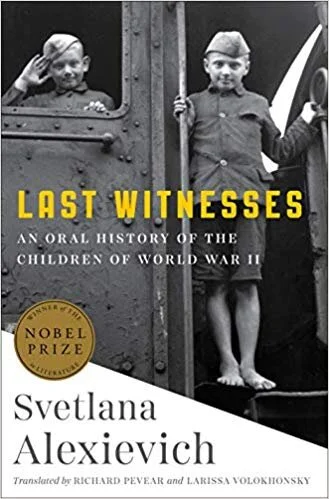
Last Witnesses: An Oral History of the Children of World War II
by Svetlana Alexievich
In Nobel Prize winner Alexievich’s latest book to be translated into English we hear from the most unacknowledged of all war veterans—those who experienced it as children. The physical details of their memories are specific to the USSR between 1940-45, but it is the children’s (boys and girls, rural and urban, Jewish and gentile) position closer to the ground that allows them to perceive unmediated the fundamentals of all war—fear, loss and uncertainty. Even more poignant are their echoed tales about how war mangles common talismans of childhood—dolls, candy, the word “Mama.” The chapters fly by—each is just a few pages of conversation—because they are both horribly compelling and too intense to linger over. Our consolation is that these children grew up to tell their stories, and Alexievich composed them into this shattering testimonial to the idea that no child should ever suffer for the political follies of their elders.
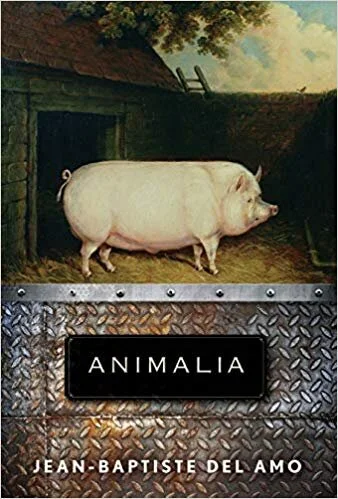
Animalia
by Jean-Baptiste del Amo
The buzz surrounding this award-winning French author’s first English translation—the saga of a family of pig farmers—always includes a warning along the lines of “You’ll never eat bacon again!” Well, I don’t know about you, but that’s the kind of literary challenge I feel compelled to accept. Del Amo’s rich, heady style almost overwhelms the imaginative senses, immediately plunging readers into the gorgeous and grisly of Gascon peasant life. We meet farmer’s daughter Éléonore pre-WWI, when human-porcine relations are interdependent if not entirely pleasant, but by the time she is a great-grandmother, (possibly) inevitable forces have twisted that relationship until the farm is untenable for pigs and people alike. It’s a visceral book, but also heart-breaking and thought-provoking—recommended for those who read environmental nonfiction as well as those who, like me, prefer to investigate most topics through a narrative lens. Timely and engaging, Animalia might be the most important book I’ve read all year. P.S. I’m still eating bacon, but much more, um, consciously.
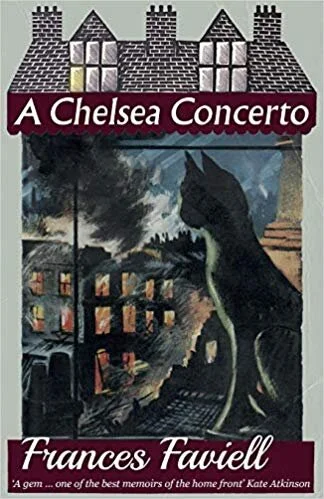
A Chelsea Concerto
by Frances Faviell
For all my fellow Blitz Lit fans out there: have I found a book for you! This thrilling memoir of WWII London is written with such immediacy and attention to detail that I swear I could hear my heartbeat while reading about some of the more harrowing "incidents" (as those nonchalant Brits referred to death and destruction). Faviell, a well-connected professional portrait painter, was in the thick of it, Chelsea being relatively hard hit, and because she volunteered as an assistant nurse, emergency telephonist, and interpreter/caretaker for the Belgian refugees in her neighborhood. She is awed by the humor, bravery, and know-how of those who endured the nightmarish scenes, but she’s also aware of intermittent despair and loss of empathy in herself as well as others. Her account feels like such a classic of the genre I’m amazed it was only brought back into print in 2016 after its initial publication in 1959. And I’ve already ordered another reissued Faviell memoir, The Dancing Bear, set in the city where she moved with her young family in 1946—Berlin!
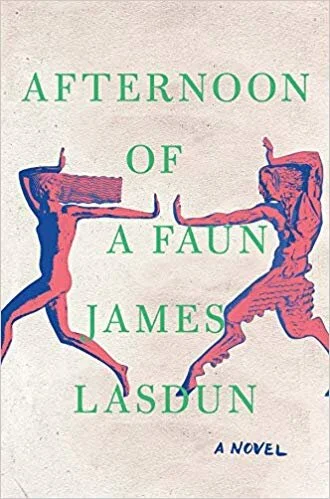
Afternoon of a Faun
by James Lasdun
These days, when public discourse seems like so much shouting past each other, the last thing you want to read is a fictionalized he-said/she-said about a #metoo moment. BUT! Not many write as lucidly as Lasdun about how people think, and his narrator—an acquaintance of both the he and the she—recounts what he is told as well as how he processes that information. While we live with the optimism and anxiety caused by a tectonic cultural shift, when masses of received wisdom are breaking up and new standards haven’t quite solidified, it’s crucial to examine not just ideas but the motives and emotions that undergird them. Lasdun’s novella has the plotting and pacing of a thriller, each revelation causing you to reexamine the situation and your own assumptions—even after you finish it! But it’s his sly wit and quietly elegant prose—shot through with images of surprising aptness (he also writes poetry)—that elevate this ripped-from-the-headlines story into a thoroughly satisfying reading experience.
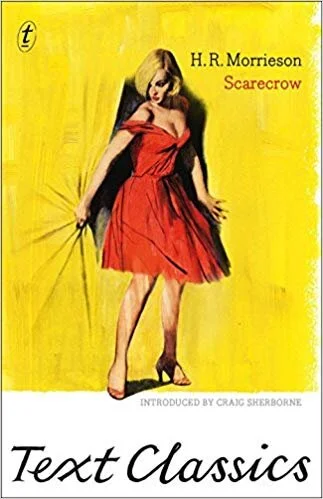
Scarecrow
by H.R. Morrieson
Why is laughing-out-loud at the written word so rare that it feels like an unexpected gift when it happens? Well, whatever the reason, this seriously funny coming-of-age story had me LOL-ing so often (there are witnesses) that I feel an obligation to share. Much of the humor comes from its dialogue: 1950’s slang and New Zealand idiom, malapropisms and idiosyncratic accents. And Morrieson—through his 14-year-old narrator, Ned—describes physical humor in a way that achieves slapstick genius. Ned’s voice hilariously renders a bookish, small-town boy’s experience, but it’s his older sister, Prudence Poindexter, who steals the show as an ingenue for the ages. And let’s not forget the titular serial killer. While cartoonish in his creepiness, the terror and devastation he causes is real. And Morrieson has the writerly skill and moral decorum so that you never laugh when you shouldn’t. (He even brought an actual tear to my eye.) His finesse makes this odd hybrid a Kiwi classic and one of the best novels I’ve read all year.
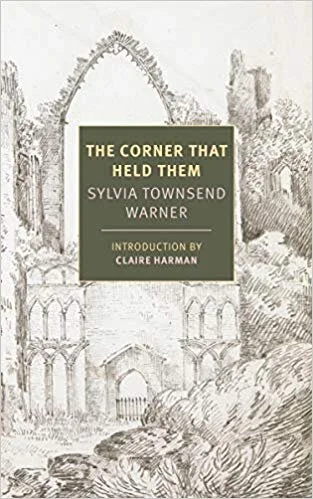
The Corner That Held Them
by Sylvia Townsend Warner
Who knew that NunLit was a genre with a passionately devoted following? Not me, until I read this unique story about a medieval convent, considered one of its classics. Townsend writes brilliantly about the momentous and mundane with the period detail typical of historical fiction, but without the novelistic reins of character hierarchy or narrative arc to steer your mind in a particular direction. When I started to contemplate (quite nunnishly) her authorial choice, I had an epiphany! She recreates for the reader the same sense of distance with which the nuns experienced life! The sisters are concerned with worldly things but they take the eternally long view: events ebb and flow and everybody and everything are significant and inconsequential at the same time. My favorite of the nuns, Dame Isabel, summed up what I think is the crux of the book: “The world was deeply interesting and a convent was the ideal place in which to meditate on the world. She was twenty-three. If she should live to forty, to sixty, her love of thinking would not be satiated.” NunLit has a new convert! (Sorry, couldn’t stop myself.)