
New Book of the Week (November 3, 2025)
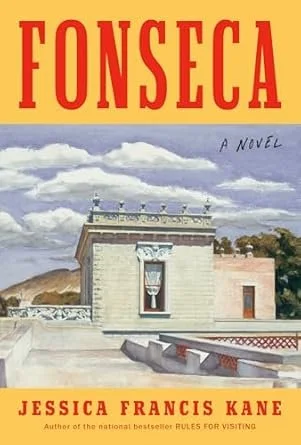
Fonseca
by Jessica Francis Kane
The public drama of Penelope Fitzgerald's life came late, as she burst into literary fame in her sixties after years of poverty and quiet desperation. She mined those private years for much of her fiction, but she never wrote about, and hardly documented, one strange episode: her trip with her young son to Mexico in the rash hope of an inheritance from distant relatives there. From this gap in her story Kane has rather boldly fashioned her own novel, speculating on Fitzgerald's inner life and on the odd expat milieu she might have found there (including the painters Edward and Jo Hopper), and tapping into the subtle humor and human yearning that make Fitzgerald's own novels so quietly compelling. —Tom
Newish Book of the Week (November 3, 2025)
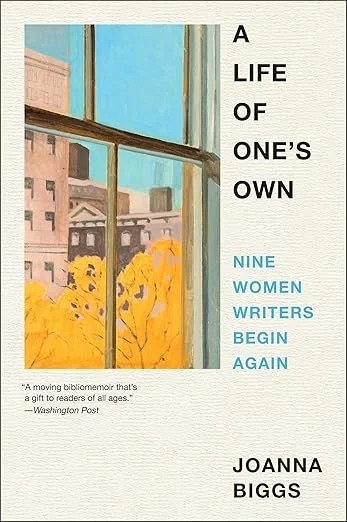
A Life of One's Own: Nine Women Writers Begin Again
by Joanna Biggs
“Even if a book is about everything else, it is never not about the life the writer lived.”
Memoir meets biography meets literary criticism in this heartfelt bibliomemoir (and yes, I was delighted to learn there's a specific word for this genre-blending). In the wake of her divorce and in the midst of losing her mother, Oxford-educated author Joanna Biggs turns to literature for comfort, wisdom, and guidance; the result is this impressive collection of essays, where she examines the lives and works of eight great women writers (Biggs herself is one of the nine promised in the title). I've admittedly only read the works of some of the included writers, but I found that this in no way diminished my enjoyment of the book; in fact, I adore Biggs's conversational, confessional tone as she spills tea about these women's personal lives and reveals much about her own as she seeks to build a life she's proud of. The cherry on top is the reading list I finished with; I feel rallied to reach for classics I've overlooked (there are spoilers if you read for plot!) and to revisit the ones I've loved before. —Anika
Old Book of the Week (November 3, 2025)
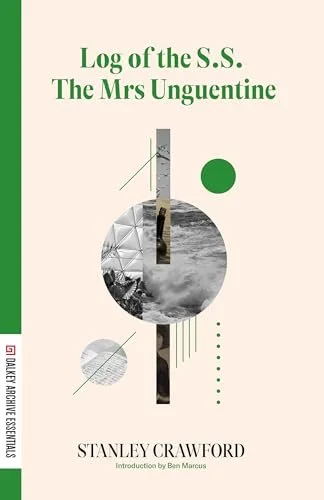
Log of the S.S. the Mrs Unguentine
by Stanley Crawford
I remain intrigued that the same person wrote the plain-spoken farmer's memoir, A Garlic Testament, that was our January Phinney by Post pick this year and this brilliant piece of weirdo fiction, but I'm as much intrigued by the connections between them as by their differences. The Log was published in 1972, just when Crawford and his wife, Rosemary (to whom the book is dedicated), started their farm, and you can imagine he wrote it as a sort of fever dream (or nightmare) of what they had gotten themselves into, and perhaps of his own impulse to create and control. It's a tale, told by the Mrs of the title, of a grand folly and an often disastrous marriage, of a giant ocean-going barge that becomes an unmoored world unto itself, presided over by the bearded, often brutal Unguentine, who mutely fancies himself an Adam—or even a Yahweh—reigning over his isolated, chaotically self-sufficient garden. It's a short book, but a crazy trip. —Tom
Kids Book of the Week (November 3, 2025)
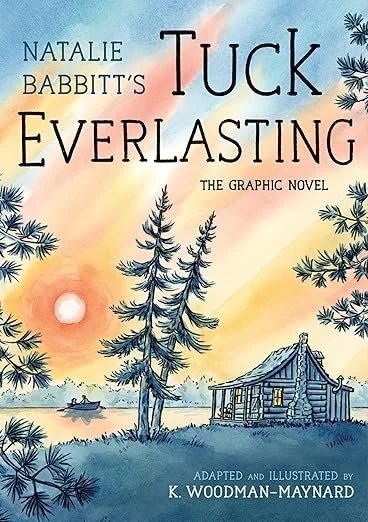
Tuck Everlasting: The Graphic Novel
by Natalie Babbitt, adapted and illustrated by K. Woodman-Maynard
Tuck Everlasting is one of my top ten favorite books of all-time, so it's hardly surprising that this beautiful illustrated adaptation will be one of my top ten reads of the year. The original tells the story of eleven-year-old Winnie Foster, who runs away to a nearby wood in pursuit of adventure and finds it in the form of the immortal Tuck family, who drank from the wood's enchanted spring nearly a century before. Woodman-Maynard's gorgeous watercolor vision captures and enhances what I loved about the original: the restless and languid feel of a childhood summer, the thoughtful conversations about mortality, and that ending. A timeless treasure. —Anika
New Book of the Week (October 14, 2025)
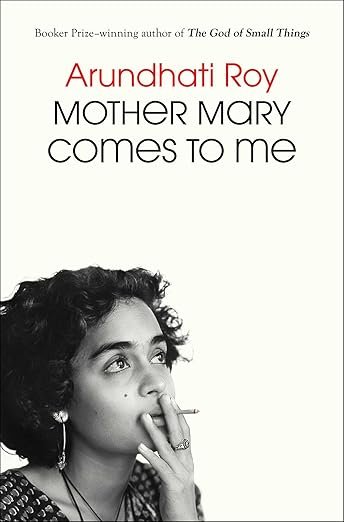
Mother Mary Comes to Me
by Arundhati Roy
In the wake of the fame granted by her bestselling, Booker-winning debut novel, The God of Small Things, Roy has mostly turned her writing to political reporting and activism. But the death of her mother, a larger-than-life figure who left her feckless husband and built an acclaimed school from the sheer force of her will while cascading a constant stream of insults toward her own children, drove Roy to tell the story of her own life. It's dramatic, funny, thoughtful, and more earthily practical than her lush fiction—especially when narrated in her own drily witty voice in the audiobook. As domineering as "Mrs. Roy" was (she commanded her children to call her the same name her other students used)—"my shelter and my storm," her daughter says—Arundhati herself is an equally forceful figure, making her way out of that storm and then reckoning with the surprising dangers of her own fame and fortune. It's marvelous. —Tom
[Download the very enjoyable audiobook from our partners at Libro.fm]
Old Book of the Week (October 14, 2025)
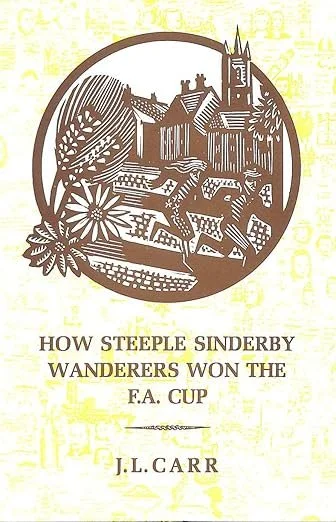
How Steeple Sinderby Wanderers Won the F.A. Cup
by J.L. Carr
J.L. Carr, in addition to writing the exquisite little novel A Month in the Country, which ensorcelled our staff last year, wrote a number of other little novels, and even published them himself, in oddball editions which are still available. As a fan of English football, I first tried this irresistibly titled tale, and while it doesn't quite carry the breathtaking weight of beauty and nostalgia of his famous book, I found it delightful: a self-consciously preposterous yarn that is more a fond satire of English village life than a sporting drama. And reading it in this small-batch package, with Carr's kooky illustrations and his handwritten note admitting how unlikely his story is, just adds to its sweet, wistful pleasure. —Tom
Old Book of the Week (October 14, 2025)
Flight Without End
by Joseph Roth
I am slowly catching up with the genius of Joseph Roth. After the multigenerational sweep of his masterpiece, The Radetzky March, this little novel reads like a minor chamber piece, but in some ways it burrowed under my skin more deeply. It's the story, such as it is, of a certain Franz Tunda—a bourgeois young Austrian officer, engaged to a suitable bride, whose life goes thoroughly sideways when he is taken as a prisoner of war and escapes to a new identity in Siberia. Possessed by a strangely indifferent restlessness, he finds himself a Soviet revolutionary, then a husband in Baku, and finally a sponger and a vagrant in Vienna and Paris: a perfectly modern man, and an utterly "superfluous" one. It's an oddly unsettling, and often drily hilarious, story. —Tom
Old Book of the Week (October 14, 2025)
Phinney by Post Book #130
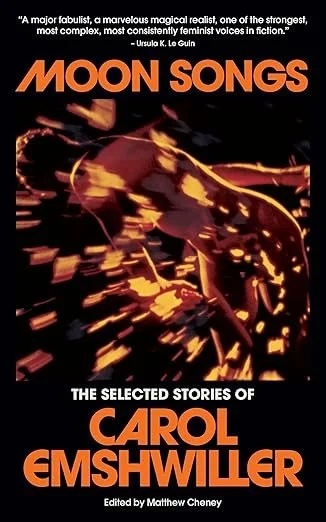
Moon Songs: The Selected Stories of Carol Emshwiller
by Carol Emshwiller
Over the more than five decades spanned by this lovingly curated collection, Carol Emshwiller held to something distinctly Emshwillerian in the stories she invented: out of the most straightforward language and a deceptively calm sensibility grew the strangest of tales. Though they were all published in science fiction magazines, there's hardly a spaceship to be found; instead there are animals, some familiar, some not (like the green, scaly, house-filling thing in "Creature"), and humans, who, even when their cruelest impulses are being suggested, still have something gentle, and gently funny, about them. A friend and peer of Le Guin and Grace Paley, Emshwiller's warm but unsettling fables have spawned a whole generation of followers from Kelly Link to Carmen Maria Machado. —Tom
Kids' Book of the Week (October 14, 2025)
Phinney by Post Kids Book #118
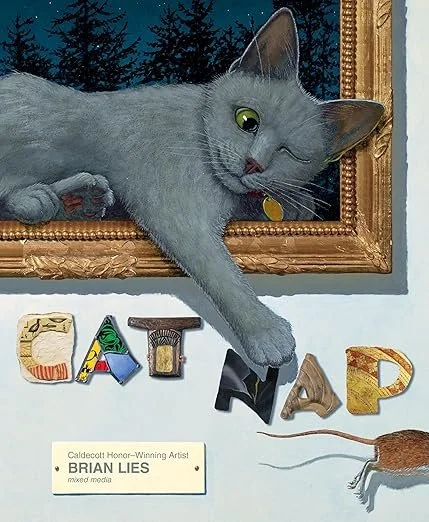
Cat Nap
by Brian Lies
In Cat Nap, a sleepy kitten follows a mouse into a Metropolitan Museum of Art poster. From there, the chase is on, through ancient Egyptian carvings, Mexican ceramics, a medieval prayer book, and more. How will Kitten find his way home again? The solution may sound familiar to any cat owner! I loved the attention to detail, with author Brian Lies basing each piece Kitten interacts with on a real work of art. The end of the book includes a spread showing how Lies created all the art for the illustrations by hand—that includes making his own stained glass and woodcarving! In a digital world, it's especially impressive to see this level of craftsmanship. The book ends with a message to readers encouraging them to try a new skill too. —Haley
New Book of the Week (September 30, 2025)
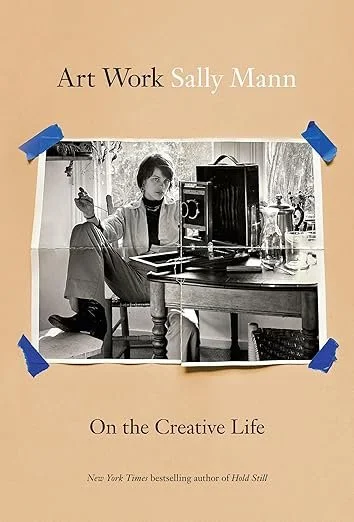
Art Work: On the Creative Life
by Sally Mann
There's something about the particular eloquence of Sally Mann's photographs—their locality, their intimacy, and the sense you get of her as not merely a silent, reserved observer but a real participant in her compositions—that makes it unsurprising she is such a good writer too. The first evidence was her 2011 memoir, Hold Still, a National Book Award finalist; the second is this book, which she thought she'd never write until she found herself jotting chapter headings. It's presented as an artistic self-help book, and it reminded me of my favorite in that genre, Twyla Tharp's The Creative Habit, in its attention to both the practical and passionate sides of long-term art-making. But Mann is such a personal artist, and such a natural storyteller, that inevitably this is another memoir of sorts, adding to her life story and revisiting her obsessions with place and family and the joys and the grind of creation. —Tom
New Book of the Week (September 30, 2025)
Dark Renaissance: The Dangerous Times and Fatal Genius of Shakespeare's Greatest Rival
by Stephen Greenblatt
The short and eventful life of Christopher Marlowe—at least what we know of it—would have provided enough drama for one of his own tumultuous plays, or one by his one-time collaborator William Shakespeare. The son of a cobbler, raised by ambition and education to the near-gentlemanly status of poet and playwright, he was likely a spy in Queen Elizabeth's service, possibly an avowed atheist (a capital crime at the time), and certainly murdered with a dagger at the age of 29. The few actual documents of Marlowe's life make this lively biography inevitably a tissue of "likelys" and "might haves," but if Marlowe himself remains a cipher, Greenblatt's unmatched understanding of the era makes it a fascinating portrait of a time more than a man, showing how a backwater culture, stalked by plague and intense political repression, whose most popular entertainment was bear-baiting, could suddenly produce the greatest flowering of dramatic art in our language, —Tom
Old Book of the Week (September 30, 2025)
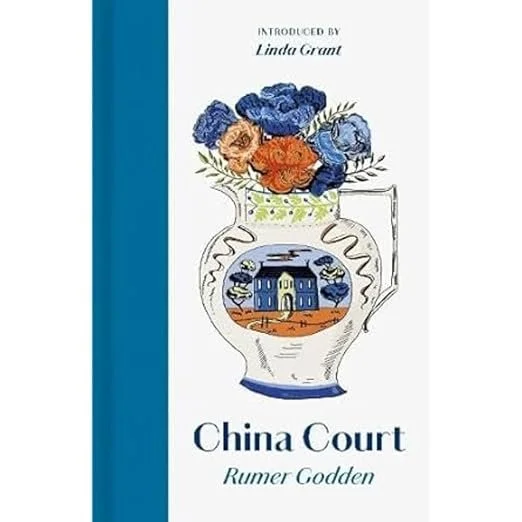
China Court
by Rumer Godden
It has all the ingredients for my ideal comfort read: a family tree, a house with a name, and a story that spans at least a century. As one plotline unfolds over two weeks in 1960, tales of earlier generations of Quins are interleaved in a particular, if not exactly chronological, way. (The family tree comes in handy.) I was gobbling up the rich historical detail of manners, fashion, decor, etc., and flipping pages to discover the circumstances of doomed romances and twisted hopes, absolutely confident that there would be—not just a happy ending—an euphoric one! But the final chapter was distinctly UNcomfortable—a curveball that I couldn’t integrate with my expectations except by reading it in a cynical and prurient way. Then I read the introduction (I never read them first) and began to reconsider. Godden is too talented to have written unintentionally, and she understands storytelling’s power to enchant. I concluded that she was breaking her own spell to remind readers of the painful truth she had been hinting at all along. And that the only thing better than a comfort read is one that—in the end—makes you think. —Liz
Old Book of the Week (September 30, 2025)
Phinney by Post Book #129
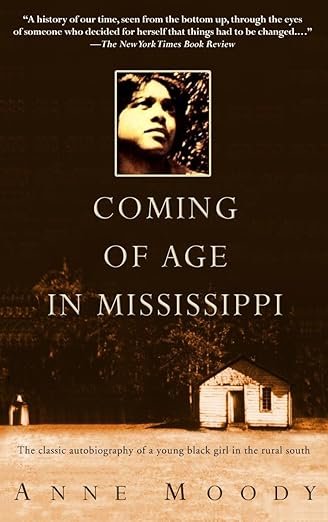
Coming of Age in Mississippi
by Anne Moody
Although she worked alongside civil rights legends like Bob Moses and Medgar Evers, you won't find Moody's name in the indexes of the big histories of the movement, and her memoir doesn't follow the arc of progress those histories trace. It's a story of frustration as much as success, of exhaustion as much as exhilaration. It's a view, not from above the ocean waves, but from inside the churn of the surf, where you can't tell if you are moving forward or backward, up or down. But it's a moving and rousing story nevertheless, as Moody, from early childhood, chafes against nearly everything in her poor rural upbringing, fights for her education and earning power, and finds a purpose—even if an often thwarted one—in political action and community. —Tom
Kids' Book of the Week (September 30, 2025)
Phinney by Post Kids Book #117
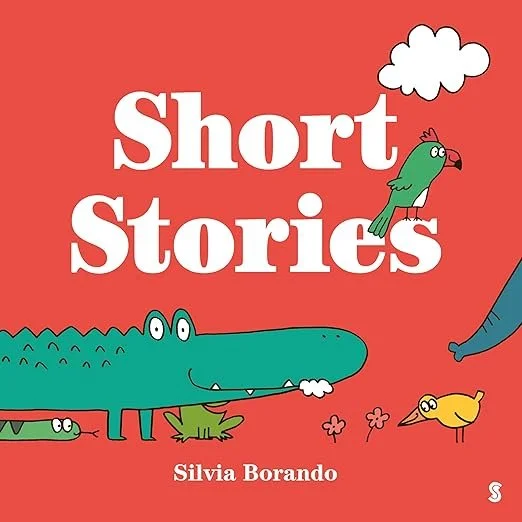
Short Stories
by Silvia Borando
Silvia Borando's Short Stories is flash fiction for kids. Each of these eleven cheeky stories is just a few sentences long, with the simple illustrations adding to the visual gags. Night falls while a snail waits for a centipede to put on their shoes. A hedgehog ruins a birthday party. A snake finds a great new outfit in a pair of socks. Fans of Remy Charlip's dark humor will enjoy this picture book. —Haley
New Book of the Week (August 18, 2025)
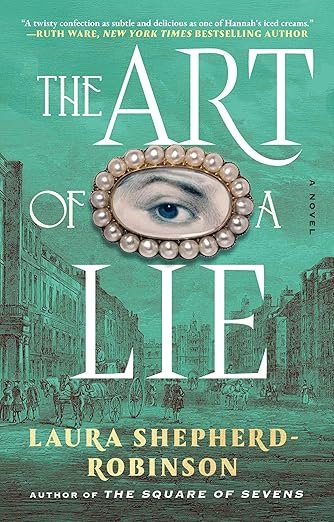
The Art of a Lie
by Laura Shepherd-Robinson
The Art of a Lie is my favorite book of 2025 so far! I was drawn in by the main character's eighteenth-century confectionery shop and treated to a page-turner full of more twists and turns than a Hitchcock film. Historical fiction can be hit-or-miss for me, based on how real the setting feels, but in The Art of a Lie, Shepherd-Robinson completely transports her readers into a well-researched 1749 London world. Learning so much about daily life and customs during this time period was a highlight, but the storyline also constantly kept me on my toes—even gasping with surprise at several parts. I'd tell you more of the plot, but I think it's best to go into this book with no prior knowledge, like I did. Check it out if you enjoy history, mystery, or just a well-told story. —Haley
New Book of the Week (August 18, 2025)
A Marriage at Sea: A True Story of Love, Obsession, and Shipwreck
by Sophie Elmhirst
"117 Days Adrift!" read the headlines, as well as the title of the book that Maurice and Maralyn Bailey published soon after being rescued from the raft they survived on when their sailboat was wrecked by a whale near the Galapagos in 1973. Actually it was 118 days, but Elmhirst is less interested in doing any correcting of the record of their well-documented adventure than, as her title implies, in painting a portrait of two singular people who twinned their lives together, before, during, and after the ordeal that made them temporarily famous. Maurice was obsessive and misanthropic, Maralyn was optimistic and capable; together their insular partnership reminded me, oddly, of the couple at the heart of another recent nonfiction favorite, Michael Finkel's The Art Thief. —Tom
Old Book of the Week (August 18, 2025)
Willard Gibbs: The Whole Is Simpler than Its Parts
by Muriel Rukeyser
This hefty, beautiful, and mysterious book tempted me from across the store for months, and when I finally had the time to sit down with it, it turned out to be all of those things: hefty, beautiful, and still mysterious. The first book in Maria Popova's new Marginalian imprint for the excellent McNally Jackson Books, it's a biography (of sorts) of the 19th-century scientist Willard Gibbs, first published in 1942 by the poet Muriel Rukeyser. Gibbs was a titan—Rukeyser, not outlandishly, counts him as one of the four great Americans of his time, along with Lincoln, Whitman, and Melville—but largely unknown then and still so now, even as his ideas, in their brilliant connection and abstraction across mathematics, physics, and chemistry, laid the foundation for much of what the 20th century discovered. "A modest man," in Rukeyser's words, "living and dying in the space of three New Haven blocks," his life story is almost vacant, so she makes it a biography of an entire age, of industrial and social transformation and of brainy, searching peers like William James and Henry Adams. It is a dense, lyrical, fascinating book, full of science that largely flew over my head and cultural history as wise as any I've read. That Rukeyser wrote it all by the time she was 29 is astounding, and makes me even more curious about her than about her elusive subject. —Tom
Old Book of the Week (August 18, 2025)
Phinney by Post Book #128
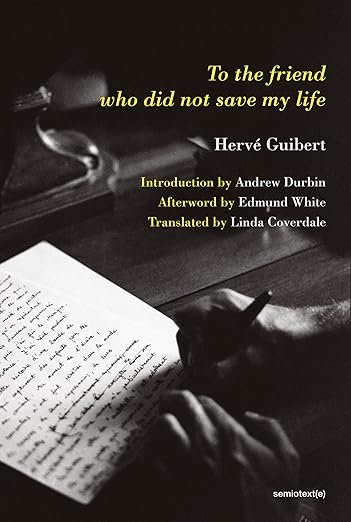
To the Friend Who Did Not Save My Life
by Hervé Guibert, translated by Linda Coverdale
Some writers, faced with the prospect of an early death, respond, at least on the page, with a kind of grace, a generous, expansive clarity, colored, even purified, by the urgency of their awareness of the mortality we all share. In this novel/memoir (one of a half-dozen books he wrote in a frenzy after being diagnosed with AIDS—a death sentence at the time—in the late '80s), Guibert is neither gracious nor generous. He is, mostly and unrepentantly, a jerk. His book, though, crackles with life, with comedy as well as tragedy, with the swerves of a mind struggling to comprehend his predicament and to find the words to express it. His sentences are often cascades of indecision, of biting, gossipy asides, of awkward physical details, of anger and once in a while even affection. I don’t claim that his bitterness carries any more truth than the grace found by other writers, but neither would I say that it carries any less.—Tom
Kids' Book of the Week (August 18, 2025)
Phinney by Post Kids Book #116
The Sleeper Train
by Mick Jackson and Baljinder Kaur
Aboard the Indian sleeper train, everyone is getting ready for bed. But one little girl is too excited to sleep. She thinks it might help to try to remember all the places she has slept in the past, like the beach, her grandparents' house, or a tent in the countryside. This gentle bedtime book feels like a classic. I particularly loved Baljinder Kaur's wonderfully detailed art, which takes readers into a magical dreamland of colors and patterns. —Haley
New Book of the Week (July 28, 2025)
Detained
by D. Esperanza and Gerardo Ivan Morales
D. Esperanza's story is a perfect example of how the personal is political. Thirteen-year-old Esperanza could not have anticipated that his first journal would become this memoir, just as he could not have foreseen the circumstances—the deaths of his caregivers—that forced him and his young cousins from Honduras and Guatemala to the United States. Unfortunately, the hundreds of perilous miles the four boys traversed over the course of four months was not the worst of it; Esperanza and his cousins were detained and separated at the border; he was then held in detention for the next five months while waiting to be reunited with his parents in Tennessee. Written with tremendous tenacity and foresight, Detained reveals the inhumanity and senselessness of U.S. immigration policies. Much like Anne Frank's The Diary of a Young Girl, this should be required reading. —Anika
New Book of the Week (July 28, 2025)
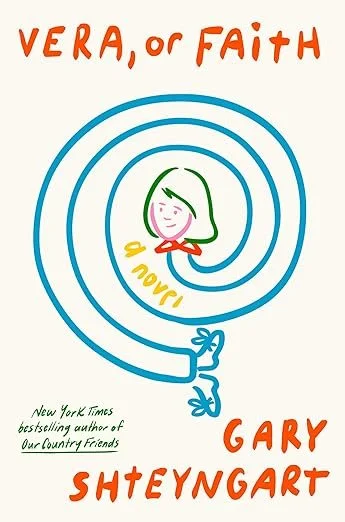
Vera, or Faith
by Gary Shteyngart
A light touch in fiction can be the hardest to master. Gary Shteyngart has always been overloaded with talent, especially with a kind of manic clairvoyance that sees about six months ahead of whenever he is writing, as in hilariously unsettling novels like Absurdistan and Super Sad True Love Story, but in Vera, the brainy, striving tween hero of his new novel, he might have found his most fluid and comfortable voice. Watching the adults around her, especially her semi-hapless Russian-emigre intellectual dad and her blue-blood adoptive mother, she tries on words for size—"merely rich," "classic trope"—and tries to make sense of the secrets they seem to hide. It makes for a story at once sweet and sharp and always zippily entertaining, haunted by an AI-enforced white nationalism that has only accelerated here since he wrote this a year ago but also full of what Vera would probably put scare quotes around, like so many of the terms she's learning to use: "heart." —Tom
Old Book of the Week (July 28, 2025)
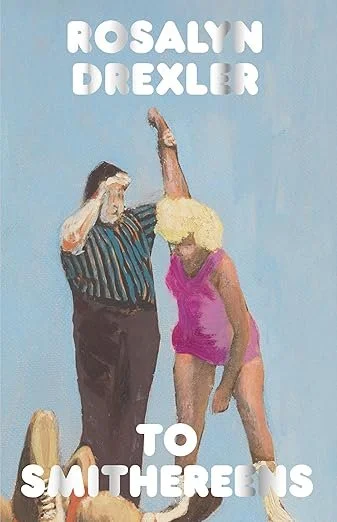
To Smithereens
by Rosalyn Drexler
I had never heard of Rosalyn Drexler before I opened this novel, published in 1972 and reissued this year as the first book from the cool new imprint Hagfish, but she seems like a heck of a woman. Mostly a painter who made her own way through the fist-fighters of Abstract Expressionism and Pop Art (the book’s cover painting is hers), she also has written plays and a dozen or so books in her 98 years (including the novelization of Rocky!), and, like her character Rosa Rubinsky, was for a time a pro wrestler on the sleazy, pre-TV circuit. Writing may have been second to painting for her, but whoa, she can write: To Smithereens is a raunchy, ratty tale that reads a little like The Queen's Gambit seen through the eyes of R. Crumb, and then seen again through the eyes of a savvy, seen-it-all feminist. It's satirical but surprisingly humane toward even its creepiest characters, and best of all, Drexler has a deliciously spot-on ear for the way people talk and think. I loved it. —Tom
New Book of the Week (July 7, 2025)
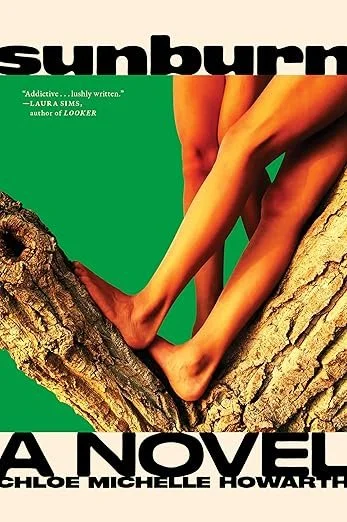
Sunburn
by Chloe Michelle Howarth
“Now is the time between birth and slaughter. Another Summer has arrived.”
Summer has come to Crossmore, and Lucy is waiting for some anything to happen. She’s waiting to love her best friend, Martin, the way she’s supposed to. Waiting, for her friend Susannah to notice her the way she burns to be. Sunburn is the fragile-volatile-inertia of young queer love coming of age in rural Ireland. Chloe Michelle Howarth’s prose is enthralling, the village of Crossmore feels like the edge of the world—suffocating and inescapable under the weight of its expectation and tradition. Lucy’s crisis of self is so well explored it was, at times, as difficult to keep reading as it was to put down. Sunburn is an agonizing debut, and the best book I read last summer. —Shane
New Book of the Week (July 7, 2025)
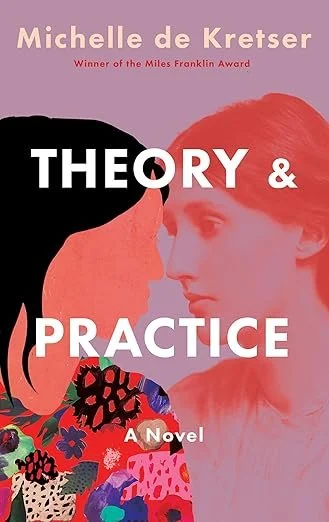
Theory & Practice
by Michelle de Kretser
Recently I sifted through our new releases in search of—well, I wasn't sure. A certain kind of book I knew I needed without quite knowing what it was. And this little novel, I realized almost as soon as I picked it up, was it. Can I describe it now? I'm still not sure, but what comes to mind first is "restlessly intelligent." An Australian woman from Sri Lanka studies Virginia Woolf in grad school, and has an irrationally possessive affair with a young man who is, mostly, seeing someone else. It's a story very much about what the title says—the gap, the friction, between theory and practice—but really it's about the grit and the thought of this particular life, looked back on from afar. If you liked Claire Dederer's Monsters (and I know many of you did), you'll find a fictional companion here, somewhat in subject but certainly in that shared restless intelligence. —Tom
Old Book of the Week (July 7, 2025)
Phinney by Post Book #127
Picture
by Lillian Ross
Among the many high points of John Huston's film career, from The Maltese Falcon through Prizzi's Honor, his 1951 adaptation of The Red Badge of Courage would hardly rate a footnote if not for this, one of the great books on Hollywood, and one of the great hanging-out books in general. Ross, who wrote for the New Yorker over seven decades, embodied two of its great virtues here: patience and style. She hung out, with incredible fly-on-the-wall access, for a year and a half as the movie was made (and then butchered by the studio), filling her notebook with the comedy and the small tragedies, the charisma and the obsequies, the excesses and the petty finances of making a movie at that exact moment. It is a treat. —Tom
Kids' Book of the Week (July 7, 2025)
Phinney by Post Kids Book #115
Time for Bed, Little Owls!
by Katja Alves and Andrea Stegmaier, translated by Polly Lawson
Mama Owl unexpectedly needs to leave home, but whooo will help put her ten little owls to bed? Readers get the chance to play babysitter by showing the mischievous little owls how to hop and flap to bed, singing them a bedtime song, helping them brush their beaks, and more. For once, kids are on the other side of the bedtime routine and this interactive picture book will have everyone settling down for sleep with the little owls. —Haley
New Book of the Week (June 17, 2025)
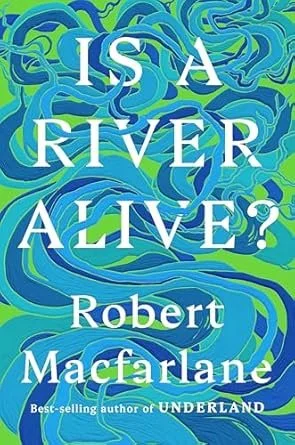
Is a River Alive?
by Robert Macfarlane
If rivers can die—we've all seen that they can—shouldn't that also mean that rivers are alive? Macfarlane's newest book is his most pointedly provocative, adding an activist's urgency to his usual, miraculous attention to nature, love for language, and charismatic generosity toward the best of his fellow humans. In this participatory study of living waterways, almost giddy with hope and the possibility of despair, you'll meet four river systems, in the cloudforests of Ecuador, the polluted flatlands of India, the wild, yet-undammed reaches of Quebec, and Macfarlane's home territory of Cambridge, and you'll also get to know some of the larger-than-life people who love and try to protect them. In a time when we pay particular attention to pronouns, you'll note the one he insists on using for each river: not "it," but "who." —Tom
New Book of the Week (June 17, 2025)
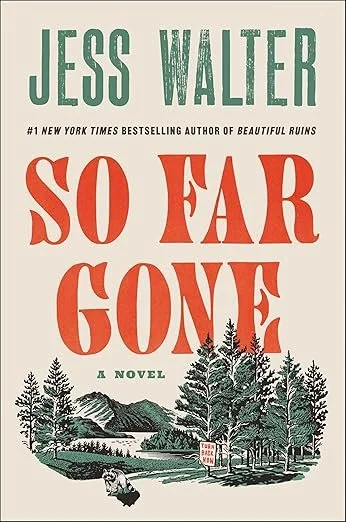
So Far Gone
by Jess Walter
There are a lot of folks in the Northwest who want to get away from it all. One of them is Rhys Kinnick, an ex-journalist who pissed off his family, chucked out his smartphone, and disappeared into the woods north of Spokane. But he's drawn back into the world by the surprise arrival of two grandchildren on his front porch, and what follows is an adventure that brings the heart and ramshackle humor of Charles Portis (and Jess Walter, for that matter) to some of the most seemingly intractable madnesses of our times. (True Portisheads will appreciate a side character named Sheriff Glen Campbell, a nod (I assume!) to the star of the film version of Norwood.) As Rhys tries to rebuild a family fractured by conspiracy theories, Christian-militia nationalism, and his own stubborn knuckleheadedness, we get just the kind of story—part comedy, part thriller, part raccoon expose—that we all might need right now. —Tom
Old Book of the Week (June 17, 2025)
Phinney by Post Book #126
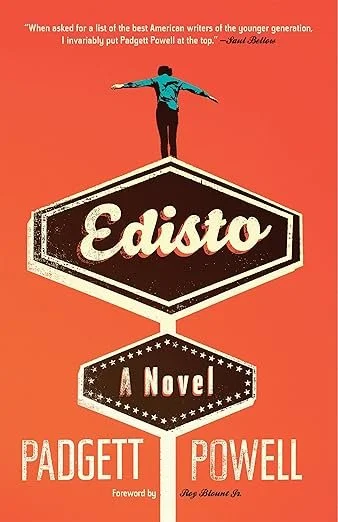
Edisto
by Padgett Powell
Some writers have such fun with our shared language—stretching it, wandering down its more neglected byways, reveling in its regionalisms—that it makes you wonder why so many of their peers are content to stay buttoned up. When Padgett Powell lets loose, his style is always grounded in the spoken word, in particular in the way people talk in the coastal lowcountry of South Carolina, the setting for this debut novel of a teenage white boy and the various authorities he tries to learn from and/or avoid. Does he learn? Does he come-of-age, as the name of this genre implies is almost inevitable? Well, sure, but not in the ways he expects, and not in ways that eclipse our sheer pleasure in hanging out during his unsettled, in-between years. —Tom
Kids' Book of the Week (June 17, 2025)
Phinney by Post Kids Book #114
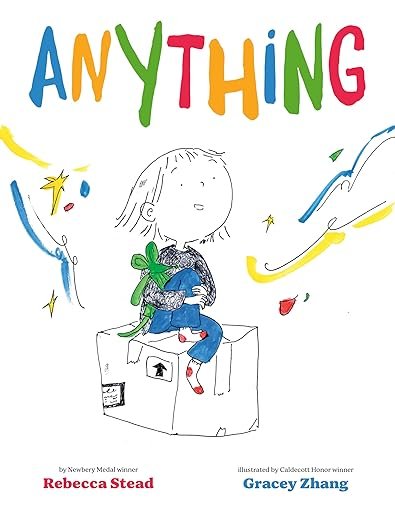
Anything
by Rebecca Stead and Gracey Zhang
The young protagonist in Anything tells us she can wish for very hard things—a rainbow in her room or the biggest slice of pizza in the whole world! But wishes (or "anythings," as she calls them) only go so far when you've just moved into a new apartment that doesn't feel like home. The girl's father has a few tricks up his sleeve to make her wishes come true and help the two of them create new memories. This is Newbery winner Rebecca Stead's first picture book and she writes for a younger audience with the same emotional intelligence that she brings to her middle-grade books. —Haley
New Book of the Week (June 3, 2025)
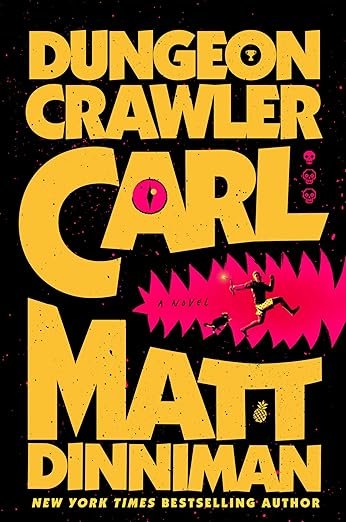
Dungeon Crawler Carl
by Matt DInniman
In Dungeon Crawler Carl, Carl’s world collapses. Literally. Every interior on Earth with a roof is collapsed and absorbed into the 18-Level World Dungeon. Part Hunger Games, part role-playing game, The Dungeon is an episodic intergalactic reality show with impossible odds. Dinniman has a clear understanding of what makes action readable and an impressive ability to bring a character to life. And beneath the very foot-enthusiastic game host A.I. and the ultra charismatic talking cat, Dungeon Crawler Carl is about humanity—finding and keeping it under a system that exploits and commodifies. It is the funnest, most engaging series I’ve ever read—and it all starts here: “You will not break me." —Shane
Old Book of the Week (June 3, 2025)
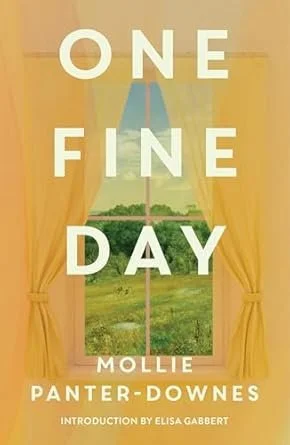
One Fine Day
by Mollie Panter-Downes
I hesitate to use an overworked booksellers’ phrase, but I can’t get around the fact that this 1947 novel epitomizes the “rediscovered gem.” It’s a 170-page story about a woman, a family, and a village on one radiant summer day a year after the end of WWII. Panter-Downes is a meticulous craftsperson and her descriptions are charmingly apt. Sheep run with the “rapid little steps of elderly ladies trying to catch a bus," two matrons of different classes wage an undeclared war, “pitting the sniff delicate against the sniff insolent”—and the written world is visible, audible. Her wistful, but not mournful, rumination on the ways war reshaped the English caste system makes the book veddy, veddy British, but I shared the uneasiness of those who had just come through an ordeal personally unscathed but unable to regain their balance. While light and compact, this book holds hints of the weighty vastness of history and time. Read savoringly. —Liz
Audio Book of the Week (June 3, 2025)
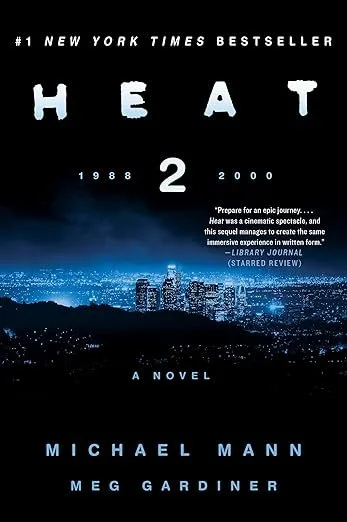
Heat 2
by Michael Mann and Meg Gardiner, read by Peter Giles
Heat is not my own favorite Michael Mann film—I'll take The Insider or Thief—but thirty years after it pitted Pacino against DeNiro as mirror-image cop and robber, it might be his most beloved. A movie sequel is finally on the way, but Mann loves the story so much that a few years back he (with crime-novelist collaborator Gardiner) published this epic before-and-after tale, which had mostly slipped past my radar until I heard raves about the audiobook. And what a ride it is: Peter Giles reads Mann's staccato, operatic prose with a gravelly, borderline-campy intensity that makes you feel like you are listening to a nineteen-hour monster truck show promo. And I mean that in a good way. To use some favorite Mann adjectives, it's electric, it's lethal, it's jacked. —Tom
(Order the audiobook from our partners at Libro.fm)
Young Adult Book of the Week (June 3, 2025)
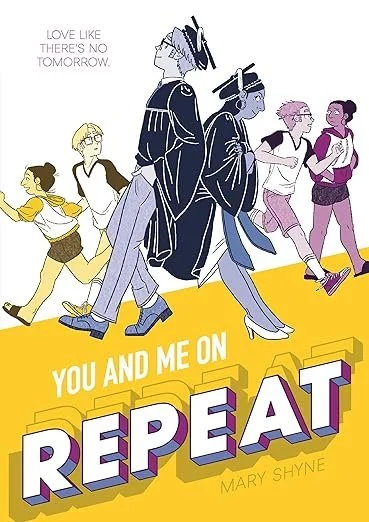
You and Me on Repeat
by Mary Shyne
Would you prefer never to relive your awkward teen fumbling again, or would you jump at the chance to repeat those misspent moments again and again until you finally perfect connecting with the person you were meant to be with? If the latter scenario appeals to you, dive into the Groundhog Day-style time loops of Mary Shyne's debut graphic novel, in which high-schoolers Chris O'Brien and Alicia Ochoa detour through countless graduation day scenarios that bring their old, fractured friendship to a new, well-earned, and sweetly nerdy conclusion that plays with the malleability of identity and the tenacity of romance. —Tom
New Book of the Week (May 19, 2025)
The Names
by Florence Knapp
Have you ever wondered who you might be with a different name? Have you ever grappled with the decision of what to name your own child, knowing it's something they'll have to carry the rest of their life? Cora meant to name her infant son after her husband, Dr. Gordon Atkin, but she feels a pull to defy him as Gordon is also her abuser. The Names explores the ripple effects of familial trauma hinging on this singular decision. Three names (Bear, Julian, and Gordon) give way to three timelines that span the next thirty-five years asking, what if? and sighing, if only. This devastatingly well-executed debut (how is this a debut?!) is worth the buzz. —Anika
New Book of the Week (May 19, 2025)
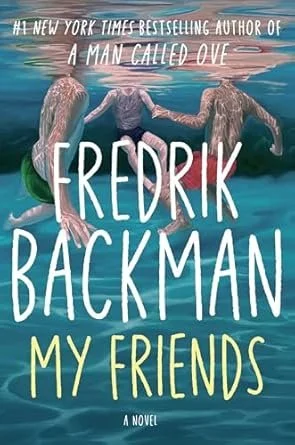
My Friends
by Fredrik Backman, translated by Neil Smith
Every novel that Fredrik Backman writes immediately becomes my favorite. There is simply no one better at illustrating the human experience of love and friendship. In his latest, My Friends, he reminds us how deep childhood friendships can be, and how regrets can haunt you years later. A group of teenagers spends a transformational summer together, riding bikes, swimming, surviving trauma, lifting each other up while the world tries to tear them down. One of them puts all of these experiences and emotions into a painting that will later set the art world on fire. Years later, we learn in flashbacks what happened to each of these children. I cried, sad tears and happy tears, and am now inspired to reach out to some of my childhood friends to thank them for helping make me the person I am today. —Doree
Newish Book of the Week (May 19, 2025)
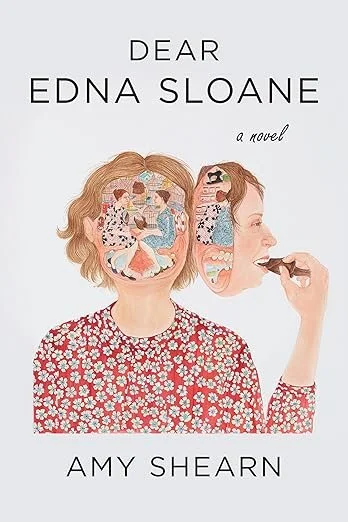
Dear Edna Sloane
by Amy Shearn
Told in a modern epistolary form that includes emails, texts, and social media posts, Dear Edna Sloane is a delight. With the ambition and earnestness of an MFA graduate who's landed a dream-adjacent job as an editorial assistant in New York City, Seth Edwards has tasked himself with tracking down an all-but-forgotten author, Edna Sloane, in hopes that doing so might launch his own career. Sloane's literary star burned bright in the 1980s with the publication of her instant and enduring classic, An Infinity of Traces, but she mysteriously disappeared from the public eye at the height of its success. The personal and professional correspondences that emerge are often filled with creativity-fueled existential angst and literary snark, and they all work together to tell the story of an evolving industry and culture. —Anika
Old Book of the Week (May 19, 2025)
Phinney by Post Book #125
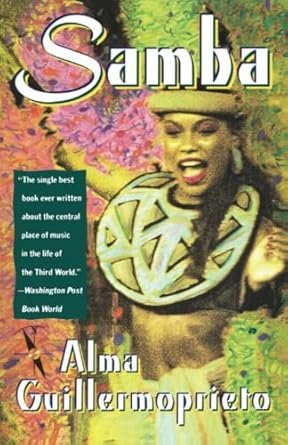
Samba
by Alma Guillermoprieto
Some of you might recall an earlier Phinney by Post pick, A Simple Story, by Leila Guerriero, about a dance contest in Argentina. Though it's a story about another dance contest in South America (during Carnival in Rio), Samba could hardly be more different. No one could ever call it simple, for one thing: into its 244 pages Guillermoprieto crams many dozens of characters and much of the political, economic, and racial history of Brazil, a history that the samba schools of Carnival often themselves enact in their chaotic, choreographed performances, in which the segregated classes and races of Brazilian society mix wildly for a moment but continue to define themselves against each other. —Tom
Kids' Book of the Week (May 19, 2025)
Phinney by Post Kids #113
And There Was Music
by Marta Pantaleo
"When you listen to music, your heart changes rhythm. Can you hear it?" asks And There Was Music. This picture book is bursting with many types of song, including a brass band in New Orleans, Irish folk music, flamenco, didgeridoo, and even astronaut Wang Yaping playing a guzheng (Chinese zither) on the International Space Station! Simple text describes how music can move us, connect us with others, recall memories, and much more, while vibrant illustrations celebrate the beautiful ways music rings out around the globe. —Haley
New Book of the Week (April 21, 2025)
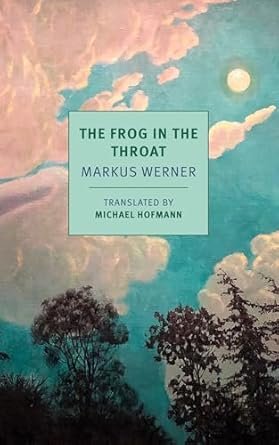
The Frog in the Throat
by Markus Werner, translated by Michael Hofmann
We pay attention to Michael Hofmann's translations here, not only for his skill in turning German into English (e.g., Joseph Roth's The Radetzky March and Jenny Erpenbeck's Kairos) but for his taste in the books he chooses to translate. So when, in the introduction to this book, he described Werner, a Swiss novelist I hadn't heard of before, as "exquisitely addictive," as "swift," "bleak," and "deadly," well, I had to keep reading. And I acquired an appetite for Werner too, which likely won't be satisfied with this one book. The story is slight, alternating between the voices of a lapsed, disgraced pastor and his late dairy-farmer father, who refuses to forgive his son even in death, but it's the voices that are the pull, grouchy rants worthy of Thomas Bernhard or Michel Houellebecq that are somehow refreshing and even humane in their flaws and fury. I don't remember when bitter misanthropy has made me so glad to be alive. —Tom
New Book of the Week (April 21, 2025)
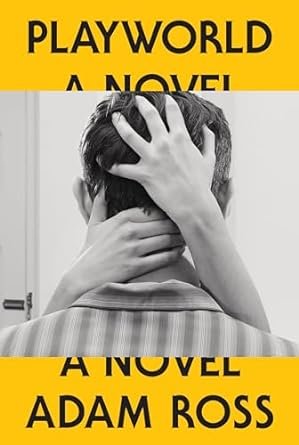
Playworld
by Adam Ross
The biographical fallacy—the assumption that fiction comes directly from the author's own life—is full of dangers, but nevertheless I was not at all surprised to learn that Adam Ross was a child actor and champion wrestler in his New York youth, much like Griffin Hurt, the main character of his new, long-in-the-making novel. The sheer density of knowledge and understanding about his particular life, in that particular time and place, feel like they could come from nowhere but experience: this is a book that feels lived. Recounting a tumultuous and transformative year in Griffin's young life, dominated by the adults who use him to work out their own needs in the style of the Carter/Reagan era, it has the bagginess of life, of details included only because they happened, but the intensity of it too. It's immersed in the details of its time and it's a throwback in style too, an old-fashioned coming-of-age story that makes you feel you have grown up with Griffin too. —Tom
Old Book of the Week (April 21, 2025)
Phinney by Post Book #124
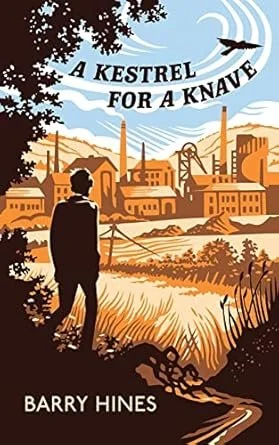
A Kestrel for a Knave
by Barry Hines
This little novel has always been hard to find in the U.S., but it's been a staple of school reading lists in England ever since it came out in 1968—and for good reason, as it's the sort of story, of a neglected, bullied boy in a poor mining town who comes alive when he learns to train a hawk, that you could imagine sparking life in young readers just as the hawk does for young Billy. It's a lovely, melancholy story (as is Ken Loach's faithful and equally lovely film version, Kes), and of course anyone who adored Helen Macdonald's memoir, H Is for Hawk, as much as I did will delight to return to the strangely compelling partnership between wild bird and human hand. —Tom
Kids' Book of the Week (April 21, 2025)
Phinney by Post Kids #112
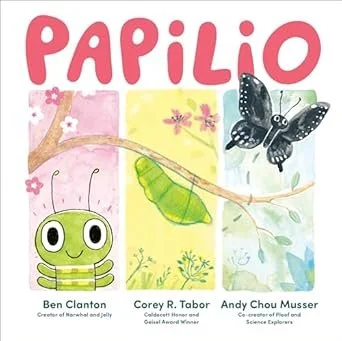
Papilio
by Ben Clanton, Corey R. Tabor, and Andy Chou Musser
If you stopped by the store earlier this spring, you may have noticed our amazing front window celebrating Papilio, a new picture book by the three-author team of Ben Clanton (Narwhal and Jelly series), Cory R. Tabor (Fox series), and Andy Chou Musser (Ploof and Science Explorers series). The three local artists each tell the story of one segment of a butterfly's life: Clanton depicts Papilio as a caterpillar finding her footing (and food); Tabor covers her precarious chrysalis days (did you know caterpillars dissolve and turn to goo?); and in Chou Musser's segment, Papilio is a beautiful black swallowtail learning to fly. The book ends with a fascinating "flutter of facts" about caterpillars/butterflies and the story of how the authors collaborated on this cute and funny story. —Haley
New Book of the Week (April 7, 2025)
Tilt
by Emma Pattee
Suddenly, the Big One—the catastrophic earthquake predicted to ravage the PNW in the next half century—is no longer a matter of What If but of What Now? Annie is nine months pregnant in IKEA stressing about a crib purchase when it happens. The narrative alternates between the present-day disaster and ruminations on the past with an eye to the immediate and uncertain future. Annie addresses her baby-to-be as she sets out on an odyssey across the ruined city of Portland, OR, to reunite with her husband. Propulsive in plot and rich in story, Tilt deftly articulates so much about motherhood and humanity, survival and strength. As a fellow Millennial and anxious new parent, I related deeply to Annie and felt myself with her every aching step of her journey, devoted and unwilling to put the book down until we reached the final page together. —Anika
New Book of the Week (April 7, 2025)
Flesh
by David Szalay
If the first thing you think when you finish a book is, “How did he do that!?”, you can be sure the author has pulled off something remarkable. I’ve long admired Szalay’s style and enjoyed his previous novels, but in his latest, the medium somehow IS the message. With spare, straightforward prose, and dialogue laconic in the extreme, Szalay portrays István, from age 15 to about 65. What he undergoes during that half-century is out-of-the ordinary, yet his story is, at bottom, about our common human experience. Physical and emotional, personal and geopolitical, it examines our bodies’ interface between our inner selves and the outer world. While Szalay has a quietly goofy humor that just tickled me, he also brought me to tears. But it wasn’t distress I was feeling, it was catharsis. And I realized that’s exactly what I’ve been needing these days. —Liz
P.S. I know it’s early, but I wouldn’t be surprised if Flesh was a Booker nominee. It’s definitely going to be on my personal 2025 Top Ten.
New Book of the Week (April 7, 2025)
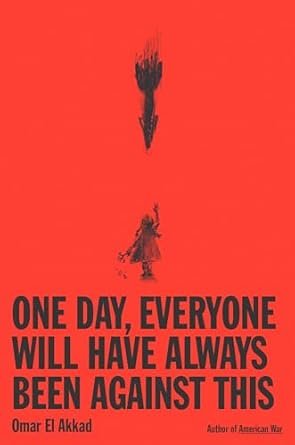
One Day, Everyone Will Have Always Been Against This
by Omar El Akkad
To say that this book began as a tweet—a single sentence posted in late October 2023, a little longer than what became its title but the same in spirit—is not to belittle it, but to capture the power of its focused eloquence. El Akkad, author of the provocative near-future novel, American War, expanded on that sentence in this nonfiction memoir/polemic not with the usual back-and-forth of Middle East historical blame but by tracing his own path: from a childhood in Egypt, Qatar, and Canada to an adult decision to become a citizen of the United States. It was a path driven in part by opportunity and the appeal of a more open society, but now, after two decades of reporting on empire and the unrelenting evidence of the destruction of Gaza, his understanding of the hypocrisy of the West and its indifference to the suffering of others becomes almost a koan of anger and anguish, tempered only slightly by the hope that there will be a future that might, at some point, see it for what it was. —Tom
New Book of the Week (April 7, 2025)
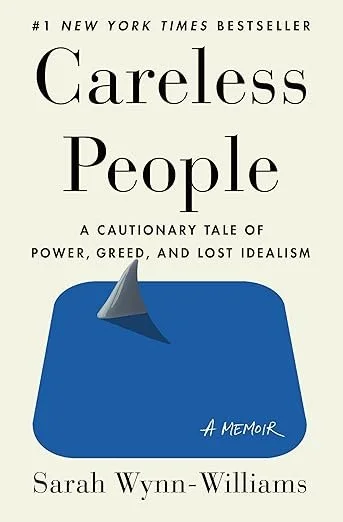
Careless People: A Cautionary Tale of Power, Greed, and Lost Idealism
by Sarah Wynn-Williams
Despite (or because of) Meta's clumsy efforts to suppress this Facebook insider's expose, it has received a flurry of coverage, focused, unsurprisingly, on its more sleazily scandalous tales. If that's what you're looking for—a sort of nonfiction White Lotus about bad behavior in Four Seasons suites—you'll find plenty of it, but don't let that obscure that this might be one of the sharpest, most revealing accounts of the perversity of modern power you can find. Wynn-Williams is an excellent storyteller, her path from idealism to disgust is credible, and her intimate view of these instant billionaires—insular, hypocritical, cluelessly conniving, obsessed with insatiable growth and personal power, and carelessly destructive in true Tom and Daisy Buchanan style—is damning. —Tom
New Book of the Week (April 7, 2025)
Raising Hare
by Chloe Dalton
"There was a time when I knew nothing about hares and gave them little thought," Chloe Dalton writes in Raising Hare. That changes when Dalton rescues a baby hare (called a leveret) near her English countryside home. As her habits shift to accommodate the little wild creature, its presence gradually awakens her to the natural world outside. This beautifully written and moving memoir will fill you with wonder and reverence. Highly recommended for anyone with even a passing interest in animals or nature. —Haley
New Book of the Week (March 24, 2025)
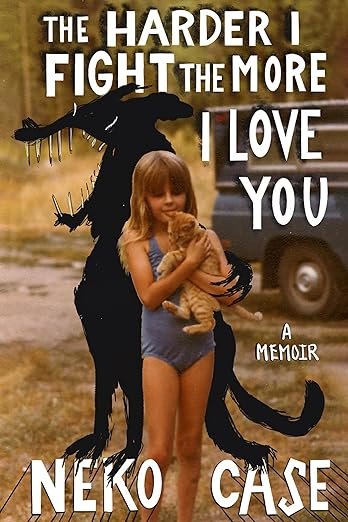
The Harder I Fight the More I Love You: A Memoir
by Neko Case
"What makes you think you're so important that someone should listen to you?" It's the question Neko Case has been asked—and even worse, asked herself—her whole life, born into a spectacularly neglected childhood ("raised by two dogs and a space heater") and bounced around the rural Northwest until she found her people and her voice in the Tacoma punk scene. If you love her singing and her songwriting, it's inconceivable you won't love this starkly beautiful book, but even if you've never heard her (you should!) you'll likely never forget the childhood she recalls and the person she became. It's my favorite book I've read so far this year—easily. —Tom
New Book of the Week (March 24, 2025)
The Secret History of the Rape Kit: A True Crime Story
by Pagan Kennedy
This short book took a long time to come together. Kennedy, a star of the zine movement in her twenties, had become a design columnist at the NYT, writing about everyday inventions, when one invention—and its little-known inventor—became her obsession: the rape kit, a simple, transformative technology created in a very unlikely place (the '70s Chicago police department). Credited to a man, it was actually the brainchild of a woman, the tireless, fascinatingly complicated, and biographically elusive activist Marty Goddard, and Kennedy's search for the facts of Goddard's life and her subtle, wide-ranging, and often deeply personal analysis of forensics and justice for the crime of rape make this single tale into a compelling American story. —Tom
Old Book of the Week (March 24, 2025)
Phinney by Post Book #123
They Thought They Were Free: The Germans, 1933-1945
by Milton Mayer
When I finally picked up this book from 1955 about the 1930s, I can't deny I had current events in mind. We look for echoes in history, to see how a society—or part of a society—could embrace authoritarianism, but what struck me most about this story was how specific it was. The most familiar elements of Nazi history—the atrocities and the leaders—are at a distance here; instead we have the story of ten "little men" (their own description) in a small German city, told by Mayer, an American reporter (and a Jew, which he never revealed to his subjects), who slowly got to know these "friends," a term that gathers a sharp edge of irony and even disgust, especially as he learns that few, if any, of them regret what they had been a part of. —Tom
Young Adult Book of the Week (March 24, 2025)
I Am Not Jessica Chen
by Ann Liang
I Am Not Jessica Chen is a haunting portrait of social pressure and academic burnout. When Jenna Chen's wish to become her golden child cousin literally comes true, she's initially elated. She finds herself aglow in a constant stream of positive attention, praise, and validation. Being Jessica Chen is so intoxicating to Jenna that when she discovers her own body is missing as well as her cousin's consciousness, her primary concern is keeping up the charade. Even when little by little, reality starts to crack through the surreal glamour of Jessica Chen's life, Jenna can't help but prefer it to her suffocatingly average one. It's only when Jenna discovers that the memory of her very existence is corroding—first, in the self-portraits she painted for an upcoming art show and then in the minds of the people who loved her best—she begins to comprehend what she stands to lose instead of gain. —Anika
Kids' Book of the Week (March 24, 2025)
Phinney by Post Kids Book #111
Every Monday Mabel
by Jashar Awan
Young Mabel has a very important appointment every Monday morning. Her sister thinks it's boring, her mom thinks it's cute, and her dad thinks it's funny. But to Mabel, watching the garbage truck rumble up the street and dump the trash cans is the best thing in the world. This is a book for all those kids who can relate to the glorious excitement of watching the garbage truck! —Haley
New Book of the Week (March 3, 2025)
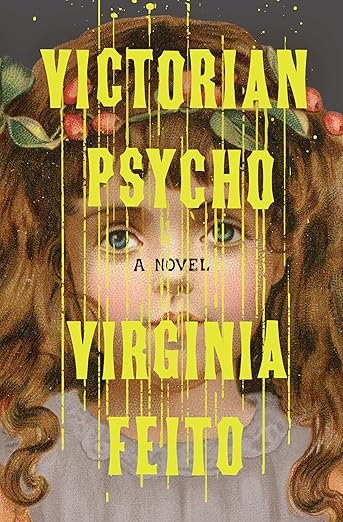
Victorian Psycho
by Virginia Feito
Jane Eyre meets Shirley Jackson (think: We Have Always Lived in the Castle) in this Victorian horror-comedy. In the movie in my mind, Tim Burton is the director. Upon arriving at Ensor House, the new governess informs the reader with casual cruelty that, "It is early fall, the cold is beginning to descend, and in three months everyone in this house will be dead." This before she, the servants, her employers, or the spoiled children have even been introduced! Miss Winifred Notty (wink) is an antiheroine molded by time and circumstance. It is her head we dwell inside, privy to her disturbing history and irreverent musings. We observe as she feigns politeness and maliciously complies to do her duties. We witness how each member of the household is their own particular brand of horrible, spurring on the Darkness that resides in her. This nasty novella doesn't spare innocents or shy away from on-the-page violence and gore, culminating in a deliciously macabre finale. It is a fantasy of female rage and wickedness, and boy, is it fun. —Anika
New Book of the Week (March 3, 2025)
Here Beside the Rising Tide
by Emily Jane
Emily Jane’s very funny debut novel, On Earth as It Is on Television, was one of my favorite books two years ago, and I frequently recommend it to people who want something hilarious yet also poignant about what it means to be human (despite the fact that it’s about aliens). Her follow-up, Here Beside the Rising Tide, is in a similar vein, as there’s something maybe alien-like out in the water off Pearl Island, the childhood home of 10-year-old Jenni. She spends a glorious summer with a kid named Timmy who loves carnivals and swimming and general kid stuff just like her and isn’t in a hurry to grow up. But then Timmy disappears into the water…and somehow reappears 30 years later, still 10 years old, while Jenni is going through a divorce, trying to finish the latest in her successful romance novel series, renovating her late mother’s home, letting her kids eat way too much sugar, and flirting with a hunky contractor who may or may not be flirting back. Meanwhile, Timmy tries to get her to help him save the world. As a solo parent with far too much on her plate this summer, how can she say no to her old friend? —Doree
Old Book of the Week (March 3, 2025)
Phinney by Post Book #122
The Light Years
by Elizabeth Jane Howard
Does your heart race with anticipated pleasure when you see not only a list of characters but a family tree on the first pages of a fat novel? If so, prepare to luxuriate, as this is just the first of five volumes in Howard's Cazalet Chronicle (all published after her 65th birthday, late in a glamorous literary life that sometimes overshadowed her writing). The large cast consists of the Cazalets, a family wealthy from the timber trade, and their similarly sized staff of servants, and it's Howard's special genius to be able to inhabit them all (the children especially, in all their fussiness, intelligence, and ignorant charm). What delights me more than anything is the vivid texture of how people lived, how they planned and prepared their meals, picked out their dresses, and arranged their adulteries. This volume is set in the late '30s, as WWII approaches—I look forward to following them, with the series, for two decades more. —Tom
Kids' Book of the Week (March 3, 2025)
Phinney by Post Kids Book #110
We Needed a You
by M.H. Clark and Olivia Holden
We Needed a You is my new go-to baby shower recommendation. This delightfully sweet picture book features soft and colorful artwork and gentle text describing all the beautiful things in the world ("there were treats made for sharing and savoring," "cats in the windows, blackberries to eat") but ultimately something was missing, the parents tell the child. We needed a you! A great way to remind little ones they are loved. —Haley
New Book of the Week (January 20, 2025)
We Could Be Rats
by Emily Austin
As I've come to expect from Emily Austin's previous two novels, the beating heart of We Could Be Rats lies in its deeply flawed but lovable characters. However, where we were given the singular perspective of Gilda (Everyone in This Room Will Someday Be Dead) and Enid (Interesting Facts About Space), in this one we get the perspectives of two sisters: Sigrid and Margit. And where Gilda and Enid grappled with profound anxiety, Sigrid struggles with suicidal ideation. Sigrid's older sister Margit is a university student working toward a conventionally attractive future, while Sigrid is a queer high school dropout working at Dollar Pal. At 20, Sigrid is grieving her childhood, having become disillusioned with adulthood, her small, conservative hometown, and her dysfunctional family of origin; the novel opens with her penning her suicide letter. Sigrid's hopeful Margit will eventually edit it for her, making it more palatable for their parents and relatives. She writes, "I'm worried my death might bum you out, so I want to leave you with something to cheer you up." All that follows is strange and tender and dark and imaginative and sad and funny. I'll read anything this woman writes. —Anika
Newish Book of the Week (January 20, 2025)
Ghost Town: A Liverpool Shadowplay
by Jeff Young
Imagine a book about post-war Liverpool that takes 90 pages to even mention the Beatles (and then only to say his mum was sad when they broke up). Young loves—has always loved—his home city, but the gods of his north England are the intensely local memory films of Terence Davies and the inscrutable pugnacity of Mark E. Smith and the Fall. He started walking its streets and back alleys and stairwells in the late '50s with his mum and granddad, and he's walked them ever since, open at all times to the sounds and sights and smells around him, but especially to the memories, his own and others, of Victorian smoke, Blitz bomb sites, and urban-planning delusions, of dockworkers and punks, of stale pints of brown and mild. It's a personal memory book that makes you understand what it means to love a living city, and all its ghosts. —Tom
Old Book of the Week (January 20, 2025)
Phinney by Post Book #121
A Garlic Testament: Seasons on a Small New Mexico Farm
by Stanley Crawford
Only when Stanley Crawford died a year ago, at age 86, did I realize that the same person was the author of two very different books that had long intrigued me: the notoriously weird experimental novel from 1972, Log of the S.S. Mrs Unguentine, and this much more straightforward memoir of garlic farming, published twenty years later. And so, intrigued, I finally read both. Mrs Unguentine is indeed fascinatingly weird (I'll say more when it's rereleased later this year), but I loved A Garlic Testament. It is a romance of sorts, built around the dream of remote self-sufficiency, on the small farm in the mountains outside Santa Fe that Crawford and his wife Rose Mary operated for fifty years, which also allowed him quieter winters for writing. But the true beauty of his story, as Crawford knows, is not their isolation, but their many connections: with friends and family who help with the work, with neighbors who share their scarce water resources, and with the people who buy their bulbs and flowers. In this, it reminds me of the best thing about running a neighborhood bookstore. —Tom
Kids' Book of the Week (January 20, 2025)
Phinney by Post Kids Book #109
All in a Year
by Chihiro Takeuchi
This picture book colorfully illustrates a year in the life of the five-member Tanaka family, following them through holidays, milestones, meals, and seasons. Chihiro Takeuchi's detailed papercut illustrations provide plenty to look at on each page (my favorite background character is the neighborhood lady with the pet alligator). A great introduction to the rhythm of the seasons for young readers. —Haley
New-ish Book of the Week (January 6, 2025)
Everything for Everyone: An Oral History of the New York Commune, 2052-2072
by M.E. O'Brien and Eman Abdelhadi
I love oral history and I love speculative fiction so I grabbed this as soon as I saw the title. But after reading the author and publisher profiles, I started to doubt that it would be an immersive imaginative experience. I was right—this is creatively packaged polemic. And I loved it! Hard-core lefty activists and people who thought the CHOP was romantic will find vindication and wish-fulfillment. But if you’re like me, and cafeteria meals, talk therapy, and dance parties are not your idea of utopia, you can still have a blast mentally debating the interviewees and pondering how history is produced. Contrary to the title, this book acts less as history and more as commemoration. Isn't it a bit ominous that we don’t hear from a single disgruntled communard? Once again, it’s history written by the victors. —Liz
P.S. I was sympathetic to a lot of the ideas but found the worldwide governmental collapse much more convincing than the ensuing worldwide organic communization. But it was an invigorating start to my reading for the year that is, alas, here.
Old Book of the Week (January 6, 2025)
Phinney by Post Book #120
Soldiers of Salamis
by Javier Cercas, translated by Anne McLean
At the center of this novel is a single, inexplicable incident from the end of the Spanish Civil War, when an unknown Republican soldier caught a leader of the right-wing Falange escaping a Republican firing squad but then walked away, sparing his life. Writing six decades later, Cercas frames his own investigation into this mystery with a tale at once goofy, sad, and movingly sweet that transformed Spanish history and literature (the novel sold millions there and broke a national silence about the war and its aftermath). For an American reader like me, it captures the horror, the poignancy, and the bewildered humor of what it's like to live through, and outlive, history. —Tom
Kids' Book of the Week (January 6, 2025)
Phinney by Post Kids Book #108
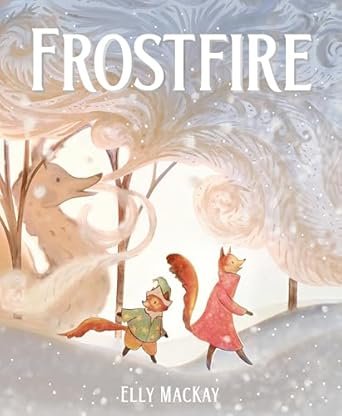
Frostfire
by Elly MacKay
Fox sisters Celeste and Miriam explore a sparkling winter wonderland in this cozy picture book. Older sister Miriam tells Celeste all about snow dragons—they collect "diamond dust," breathe frostfire, and pretend to be snowbanks. But are snow dragons actually real? Elly MacKay's beautiful papercut photo-illustrations make winter look dreamy and magical. —Haley
New Book of the Week (November 26, 2024)
Question 7
by Richard Flanagan
One of the first books I reviewed for this newsletter was Richard Flanagan's novel The Narrow Road to the Deep North, which soon after won the Booker Prize and remains one of the best books I've read in the last decade. Somewhat inexplicably, I've hardly read him since, but his new book must have been what I was waiting for: it's every bit as good. A memoir (if you can call it that) rather than a novel, it returns to the same source as The Narrow Road (his father's harrowing time as a Japanese prisoner during World War II), but in this book that memory, beginning with the moral question of the atom bomb dropped on Hiroshima (which Flanagan is sure saved his father's life), sets off a chain reaction of its own, from H.G. Wells to physicist Leo Szilard to the near-destruction of Aboriginal Tasmania (Flanagan's home) to his own near-death experience in his 20s. It's a book of deep seriousness worn lightly, and one worthy of a lifetime's thought and experience. —Tom
New Book of the Week (November 26, 2024)
Final Cut
by Charles Burns
I returned to another author of an all-time favorite this month. I often name Charles Burns''s 2005 graphic novel, Black Hole, a jet-dark story of a disease sweeping through '70s teens, as my favorite Seattle book, but I've never found another book of his that wove a spell like that one. This new one, set in a similar place and time, is a smaller story, without the majestic scope (or the granular weirdness) of Black Hole, but it's a very good one, an almost simple tale of looking and wanting so much you lose sight of what you were looking at (if you ever really had it in the first place), made concrete, yet again, by the meticulous strangeness of Burns's inky-black lines. —Tom
New Book of the Week (November 26, 2024)
Brothers
by Alex Van Halen
Two mixed-race immigrant kids, who spoke Dutch until they moved to California when they were nine and seven, where they won citywide competitions in classical piano. That may not be your image of the origin story of the kings of party rock, but that's where Van Halen began, with two music-loving brothers who decided they'd rather be rock stars, and met a flamboyant egomaniac named Dave Roth who wanted to be a star even more. Despite all their partying (which he hardly regrets), drummer Alex's memoir (as you might sense from the cover) is in part an elegy for his late brother Ed, the guitar virtuoso, and also for their band at its most combatively creative. For all the drama their stardom kicked up, the brothers (like their Dutch father) were music professionals above all, and while Alex might settle a few scores here, he's mostly sober (and insightful) about those intoxicating years. As he says about the bandmate he hardly speaks to now, "we never fought better with anyone than Dave." —Tom
New Book of the Week (November 12, 2024)
Big Vegan Flavor
by Nisha Vora
Unless you have your own test kitchen, reviewing a new, 600-page cookbook can only be a partial exercise, but after using Big Vegan Flavor for the last two months as a part-time, non-expert cook in a mostly vegan household I can say that it has been a slam-dunk success every time. Vietnamese Rice Noodle Bowls with Crispy Tofu & Mushrooms? Yes! Lemony Pasta with Sausage & Broccoli? Yum! Cheesy Herb Bread Pudding with Caramelized Leeks? Delish! Braised Carrots & Chickpeas with Dill Gremolata? Our handwritten note on this page: "So. Damn. Good." The flavors are indeed big, the recipes are straightfoward, and we're just getting started. —Tom
Old Book of the Week (November 12, 2024)
Phinney by Post Book #119
Meaning a Life
by Mary Oppen
Mary Colby and George Oppen met in a college poetry class in Corvallis in 1926; they spent a night together, for which Mary was expelled, but by then they had chosen to leave their pasts behind to share a life full of "conversation, ideas, poetry, peers." In the 50 years that followed, they found all of those, as well as hoboing, art-making, sailing, donkeys and horses and dogs, war, the Communist Party, parenthood (after many lost attempts), labor and labor organizing, exile (both chosen and not—they spent many blacklisted years in Mexico) and return. Mary's account of their shared life—in her first book, published in her 70th year—is told with deliberate, simple eloquence, and it's a pleasure and a provocation to read of lives lived with such originality and courage. —Tom
Kids' Book of the Week (November 12, 2024)
I Know How to Draw an Owl
by Hilary Horder Hippely and Matt James
I Know How to Draw an Owl is my favorite picture book of 2024. Beautiful and heart-wrenching, yet as quiet as an owl gliding through the trees, it depicts a serious issue with subtlety and sensitivity. Belle and her mom have been sleeping in their car in a forested park. It's scary being in a strange new place, but one night Belle finds comfort in the huge eyes of a majestic owl who seems to be welcoming them. Through minimal text that packs a punch, local author Hilary Horder Hippely has crafted a meaningful book that stays with you for a long time. —Haley
Old Book of the Week (October 29, 2024)
The Children's Bach
by Helen Garner
This book reminded me of the 1983 movie, The Big Chill, but with more nuance and an off-beat soundtrack (and an Australian setting). Published just a year later, it’s also about college classmates from the sixties whose orbits recross in the eighties. But while the film is smugly (says a smug Gen X-er) focused on Boomers’ disillusionment, Garner seems to see the era not as a failed revolution but a nudging open of the doors of convention. After graduating, paterfamilias Patrick and spiky-haired, loft-dweller Elizabeth made different life choices, but Garner never judges, only observes. In fact, she shows us characters through each other’s eyes—with only brief glimpses into their thoughts—making them less knowable, but more alive because of that. I adore Garner’s realism because it’s spare and straightforward and then she’ll throw in a fillip of particularity—a physical detail, a line of dialogue—that almost shifts the tone from fiction to documentary. Garner is a national literary treasure in her native Australia and she deserves a higher profile here. And YOU, Discerning Reader, deserve to be introduced to her unique style and sensibility. —Liz
Kids' Book of the Week (November 12, 2024)
Phinney by Post Kids Book #107
The Little Chefs
by Rosemary Wells
Anyone who has ever had a kitchen mishap will wish they had the Little Chefs on speed dial after reading this creative picture book. The next time your cookies burn or your soup is tasteless, look for a tiny phone hidden somewhere in your kitchen (every kitchen has one) with a direct line to the tropical hangout of the Little Chefs. This quirky book includes three separate young protagonists' tales of culinary woe. Each time disaster strikes, these miniature cooks and bakers swoop in to dry tears and save the day with their cooking expertise. Perfect timing for the holiday season! —Haley
New Book of the Week (October 29, 2024)
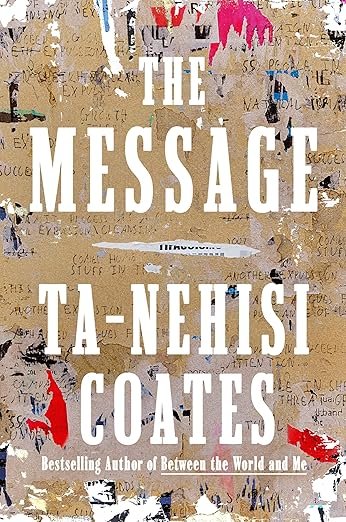
The Message
by Ta-Nehisi Coates
What began as a book about the craft and politics of writing—addressed to his Howard University students, as his bestseller Between the World and Me was written to his son—became something else as Coates, following his own dictum to make writing concrete by reporting, was changed by the three places he visited: Senegal, in his first trip to the African continent; South Carolina, where a high school teacher put her job on the line to teach one of his books; and Palestine. That third section, the longest, has rightfully received all the attention, and not only because of the ongoing war. It's there that Coates is most engaged, and most confounded, by witnessing Israel's systemic subjugation of its Palestinian subjects, seeing its echoes of American Jim Crow, and realizing how little of that story had reached American eyes. —Tom
New Book of the Week (October 29, 2024)
Traces of Enayat
by Iman Mersal, translated by Robin Moger
When Mersal, a young Egyptian literary scholar, encountered the novel Love and Silence by chance at a Cairo bookshop, she was drawn to the book's beauty and strangeness, but also to the author, the nearly anonymous Enayat al-Zayyat, who had killed herself at age 27, thinking her only novel would never be published. Mersal's years-long search for answers about her life, a kind of Egyptian Quest for Corvo, ends up as much a portrait of a time as of its still-elusive subject: the revolutionary era of Nasser, the Golden Age of Egyptian cinema, and a woman struggling against traditional culture and artistic isolation, who still can speak through pages she never knew would be published. —Tom
Newish Book of the Week (October 29, 2024)
The Book of Sleep
by Haytham El Wardany, translated by Robin Moger (yes, the same translator as Traces of Enayat)
Forget space, or the dark depths of the oceans: the true unexplored human frontier is the third of our lives we spend suspended in the strange netherworld of sleep. For all the talk of dreams, how little has been written of those hours! This slim book, by an Egyptian writer who lives in Berlin, grants that world its inaccessibility—the "neglected excess that everyone knows about and no one speaks of"—but speaks of it nevertheless, in lovely, exact, mind-broadening philosophical vignettes that make it one of my favorite discoveries of the year, and the one I'm likely to keep by my bedside for years to come. —Tom
Old Book of the Week (October 29, 2024)
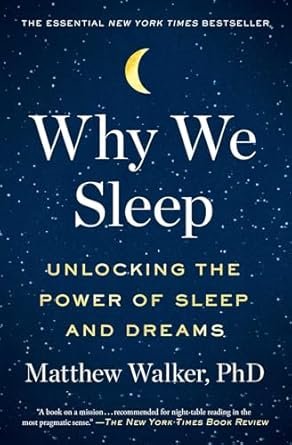
Why We Sleep: Unlocking the Power of Sleep and Dreams
by Matthew Walker
Walker, a professor of neuroscience and psychology at Berkeley, has made the one-third netherworld of sleep his life's work, and when you're a reader in his hands, it's hard not to be convinced there's nothing more important to understand than this hallucinatory, death-like interlude that nearly every living organism requires to survive. As he shows, citing study after study of recent research, we don't merely rest during sleep: we repair, we organize, we create, we restock, in our brains and in every cell of our bodies. And, crucially, too few of us (this writer included) give sleep the one-third of our time it deserves—Walker cites insufficient sleep as a contributor not just to exhaustion but to everything from depression to cancer to Alzheimer's. It made for great bedtime reading, except that I felt guilty for not putting it down and letting sleep do its good work. —Tom